
Exploring the Relationship Between DOF and Focal Length
How Focal Length Influences Depth of Field (DOF)
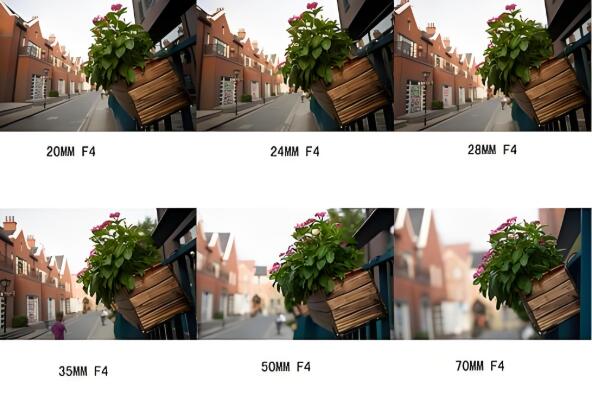
When discussing depth of field (DOF), many assume that changing the focal length automatically alters how much of a scene appears in focus. However, this relationship is more nuanced when field of view (FOV) and brightness are held constant. According to optical physics, the focal length has no influence on the DOF if FOV and F# are constant. This means if you adjust focal length but maintain the same angle of view and aperture setting (which controls brightness), the depth of field remains unchanged.
Here’s why: to keep FOV steady, you gotta move closer or farther from what you’re shooting. This keeps magnification and numerical aperture (NA) the same. So, the sharp zone in your shot stays put. Even if you switch lenses, DOF won’t budge if FOV and F# are locked in.
Maintaining Field of View While Adjusting Focal Length
To keep FOV the same when you change focal length, you need to shift your spot. Say you swap a 25mm lens for a 50mm one. You’d have to step back twice as far to keep the same picture frame. This balances out any zoom changes, so your shot looks the same size.
In things like security cameras or factory setups, Fixed Focus Lenses use this trick. A fixed lens CCTV security camera has a set focal length. Once it’s set up, the view’s locked in—no changing it! Wanna tweak FOV without new lenses? Zoom Lenses, or varifocal ones, are your best bet.
The Role of Sensor Size in DOF and Focal Length Dynamics
Sensor size is a big deal here. Bigger sensors need longer focal lengths to get the same FOV as tiny ones. But here’s the cool part: if you match framing and aperture, DOF stays the same. It’s like a math rule—DOF is Depth of Focus divided by magnification (β), and that stays steady.
So, whether you’ve got a small 1/3″ sensor, a 2/3″ one, or a big full-frame, DOF won’t move if you keep everything else the same. This is super handy for pros setting up a bunch of cameras that need to look alike.
The Impact of Constant Brightness on Optical Parameters
Aperture and Exposure Considerations When Brightness is Fixed
Brightness in cameras comes from the aperture, or F#. If you gotta keep brightness steady—like in factory checks or machine vision—you can’t just play with aperture to change DOF. Why? The F# stays fixed to keep light the same. That locks in both exposure and DOF.
So, with constant brightness, you can’t tweak aperture to mess with focus. You’ll need other ways to fix up your shot.
Balancing ISO, Shutter Speed, and Aperture with DOF Requirements
Can’t change aperture because brightness has to stay put? You balance ISO and shutter speed instead. Bump up ISO to let in more light, but watch out—it might make your picture grainy. Slow the shutter speed to grab more light, but that can blur stuff that’s moving.
For example, low F-number means big aperture lenses. That makes stuff up front sharp but the background all fuzzy. Want everything in focus? Pick a higher F-number for a tiny aperture. It’s all about what your picture needs while keeping brightness steady.
Achieving Consistent Field of View with Varying Focal Lengths
Techniques for Matching FOV Using Different Lens Configurations
Getting the same FOV with different lenses takes some brain work. You gotta figure out sensor size and how far you are from your subject. Companies like AICO Electronics make varifocal lenses that help out. Their 1/1.8″ 10-50mm 6mp c mount 5X zoom cctv varifocal cam lens, for instance, hits 6mp resolution at f/2.8~f/16. It’s super neat for jobs needing sharp details and steady light.
A tiny aperture gives a big DOF—everything’s sharp and snappy! A wide aperture keeps things clear up close but blurry farther out. Picking lenses with low F-numbers and high MTF values makes sure your shots look awesome, no matter the depth.
Custom Lens Solutions from Hangzhou AICO Electronics Co., Ltd. for Specific DOF Needs
Hangzhou AICO Electronics Co., Ltd. whips up custom lenses just for your DOF needs. Their customization service makes solutions fast and cheap for things like factory imaging.
Practical Applications in Imaging Systems
Industrial Vision Systems Requiring Controlled DOF and FOV
In factories where stuff zooms by—like on assembly lines—you need focus that stays steady across different heights. Fixed Focus Lenses with big DOFs are perfect. They keep things sharp without messing with refocusing. Pair them with tiny apertures and bright LED lights.
Fixed Focus Lenses have bigger apertures and super great quality. They’re the go-to for awesome photos when you can’t skimp on clarity, even in tight spots or with moving parts.
Surveillance and Machine Vision Scenarios with Fixed Brightness Constraints
Security cameras indoors often have steady light. That makes them great for fixed-aperture setups that max out coverage and sharpness. Security cameras with a long focal length—like 8mm or more—are perfect for key spots like doorways where you need clear faces for recognition.
On the other hand, wide-angle lens with a 2.8mm focal length cover big areas like lobbies or parking lots. They cut down blind spots, which is a big deal when you can’t afford tons of cameras.
Frequently Asked Questions
What happens to depth of field if I change focal length but keep brightness and field of view constant?
A: If both brightness (aperture) and field of view remain unchanged during a change in focal length, then depth of field does not change either because magnification stays constant too.
Can I use longer focal lengths to get better background blur?
A: Yes—but only if you don’t compensate by stepping back to maintain framing. If you keep your subject framed identically using different focal lengths by changing distance accordingly, background blur remains similar due to equal magnification ratios.
Does sensor size affect my ability to control depth of field?
A: Yes—larger sensors generally allow shallower depths of field at equivalent settings due to longer required focal lengths for matching angles-of-view compared to smaller sensors.
Why does my image stay equally sharp even after switching between two different prime lenses?
A: Because if you adjust your position so that both images have identical composition—and use identical apertures—the resulting magnification stays equal; hence so does your depth-of-field range.
How do I choose between wide-angle vs telephoto lenses based on my scene’s required depth?
A: Choose wide-angle if you need broader scenes captured sharply throughout; opt for telephoto when isolating subjects against blurred backgrounds is desired—but remember this only works without compensating distance changes that would negate blur effects.
Explore our full line-up at Hangzhou AICO Electronics Co., Ltd.—we keep providing innovative optical solutions tailored for custom imaging needs!