
What is DOF?
Definition and Optical Principles Behind DOF
Depth of field (DOF) is how much of your picture looks sharp around the spot you’re focusing on. A lens can only focus perfectly on one point at a time. But the change from sharp to blurry happens slowly. So, things in a certain range—the DOF—still look pretty clear when you look at the photo. There are two kinds of DOF: shallow (small) and deep (big). Sometimes, you want everything sharp, so a big DOF is great. Other times, a small DOF is better because it makes your subject stand out while blurring stuff in front or behind.
Factors That Influence Depth of Field in Optical Systems
Three main things change DOF: focal length, aperture (f-number), and the circle of confusion (CoC). The CoC is about how much blur is okay before something looks out of focus. A higher f-number gives a bigger DOF, which is really awesome. But the Rayleigh Criterion says a higher f-number can make the picture less sharp. So, a bigger DOF might mean losing some clarity. Here’s something neat: focal length doesn’t affect DOF if the field of view and f-number stay the same. That means swapping lenses won’t mess with DOF unless other things change too.
Challenges Caused by a Small Depth of Field
Focus Precision and Subject Isolation Issues
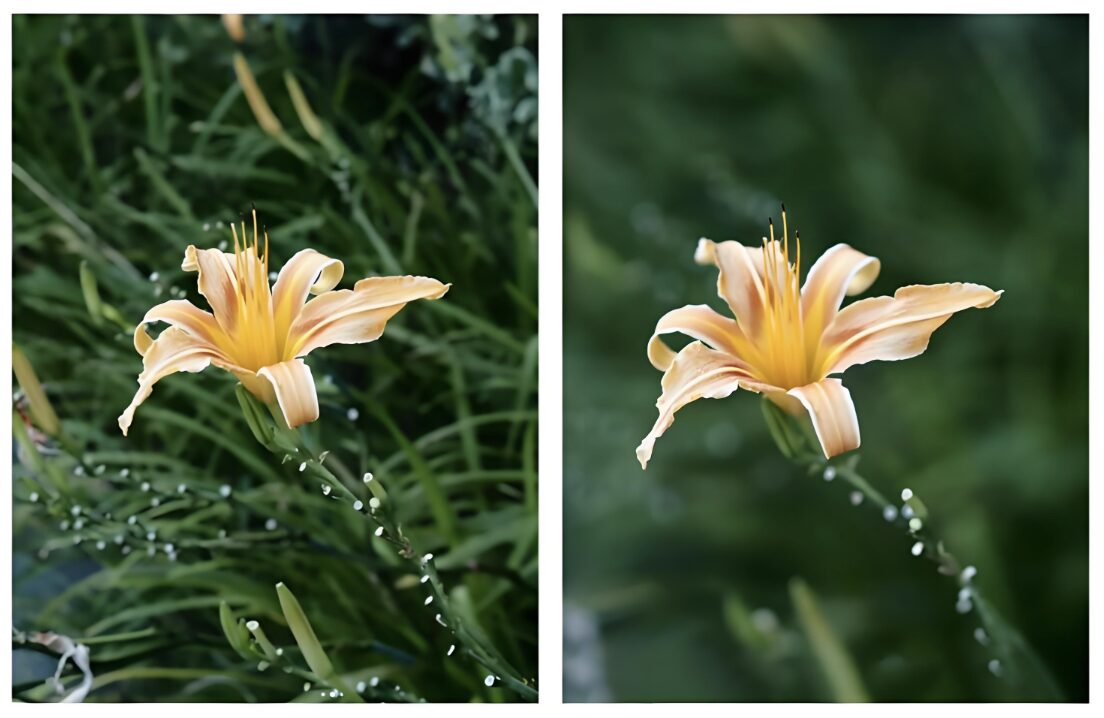
A small DOF can make your subject pop against a blurry background. But it’s tricky. With such a tiny focus range, even a little wiggle from the camera or subject can make stuff blurry. This is a big problem in macro photography or portraits where you need super sharp focus.
Impact on Image Sharpness Across the Frame
When you use a wide aperture for a small DOF, only a thin part of the scene stays sharp. High DOF and high resolution don’t mix well! If you open the aperture for more light or a neat blurry effect, you might lose details in the front and back of the picture.
Limitations in Fast-Moving or Multi-Subject Scenes
A small DOF is tough when you’re shooting stuff that moves fast or when you have multiple subjects at different distances. Keeping everything sharp is almost impossible without losing the cool style you want or needing a bunch of editing later.
Practical Techniques to Manage Small DOF Effectively
Adjusting Aperture Settings for Greater Control
One simple way to get a bigger DOF is to use a higher f-number, which means a smaller aperture. A higher f-number gives you more DOF. But you gotta watch out for light. Smaller apertures let in less light, so you might need to tweak other settings. Lenses with manual iris control, like AICO’s Manual-Iris lens series, let you adjust the aperture just right for what you’re shooting.
Using Focal Length and Camera Distance Strategically
Focal length doesn’t change DOF if the view and brightness stay the same. But standing farther from your subject makes the DOF bigger. For example, using a 25mm lens at 2 meters gives you more focus depth than at 1 meter. Wide-angle lens is awesome too because they naturally give a bigger DOF than telephoto lens.
Leveraging Manual Focus for Enhanced Accuracy
When the focus range is super tight, like in product photos or science pictures, manual focus is key. Autofocus might not hit the exact spot you need.
Tools and Accessories That Support DOF Management
Use of Focus Assist Technologies in Lens Systems
Lots of new cameras have tools like peaking highlights or digital zoom to help with manual focusing when DOF is small. These are super useful when using high-resolution lenses like AICO’s 1.1 inch P-Iris 12mp 4K C mount motorized focus zoom cctv lens, which need exact focus. Some fancy systems use piezo actuators to make tiny focus tweaks. This is great for stuff like iris detection, where you take lots of shots at different distances to pick the best one later.
Role of Tripods and Stabilizers in Maintaining Clarity
Even a tiny shake can ruin a photo with a small DOF. Tripods keep the camera steady to stop blurry shots from hand movements. Stabilizers are great for video or moving setups. Both are must-haves when using low f-numbers or long lenses that make shakes more obvious.
Benefits of Using AICO’s Optical Accessories with Lenses
AICO has a bunch of accessories to make lenses work better. They offer infrared cut filters for real colors and high-transmission coatings to cut down on glare in bright light. Their fixed-focus lenses are made for specific sensor sizes like 1/3″, 1/2″, 2/3″, and 1″. These work awesome for surveillance systems and industrial cameras.
Hangzhou Ai Ke Electronics Co., Ltd. Customization Service
Choosing the Right AICO Lens for Your DOF Requirements
Picking the right lens for your shot is super important. Whether you’re taking close-up pictures or watching big areas with surveillance cameras, you need to match the lens specs—like focal length, resolution (in lp/mm), distortion, and mount type—to get a great photo. For example:
The ACH0814M3M has an 8mm focal length with super low distortion (<0.5%). It’s great for regular shots.
For high-resolution needs up to 10MP sensors, the ACKHF3524M10MP gives clear pictures at longer distances.
Each lens lists angle-of-view details for different sensor sizes, so you know what your shot will look like before you start.
OEM and ODM Options for Specialized Optical Projects
If you need custom lenses, AICO’s strong R&D team can help with OEM and ODM projects. They work in areas like medical imaging, machine vision, robotics, and science, making lenses that fit special needs. AICO’s team sticks with you from the first idea to final production to make sure everything works great without costing too much.
Evaluating Cost-Effective Solutions Without Compromising Quality
Fancy lenses can be expensive because of their materials or how they’re made. But AICO keeps prices fair while giving you top-notch quality. Their C-mount fixed-focus lenses are a good deal for surveillance setups. They have features like multi-layer coatings and wide aperture ranges (e.g., F1.4~22) for clear shots in all kinds of light. Their board lens series is small but strong, perfect for tiny systems where space is tight but you still need good resolution up to 5MP or more.
Frequently Asked Questions (FAQ)
What is DOF in photography?
Depth of Field (DOF) is how much of your photo looks sharp around the focus point. It depends on things like aperture size (f-number), how far you are from the subject, sensor size, and lens design.
How do I increase my camera’s depth of field?
You can make DOF bigger by using a higher f-number (smaller aperture), standing farther from your subject, using shorter focal length lenses (wide-angle), or picking smaller sensors, which give more focus depth naturally.
Why is shallow depth of field difficult in macro photography?
In macro shots, where you’re super close to the subject, even tiny moves can mess up the focus. The DOF is often just a few millimeters, so it’s tough to keep everything sharp without stacking photos or using a smaller aperture.
Can I get both high resolution AND deep depth?
It’s hard because high DOF and high resolution don’t mix well! A smaller aperture gives more DOF but can make details softer because of diffraction. Lenses like AICO’s high-resolution fixed-focus ones help balance both.