
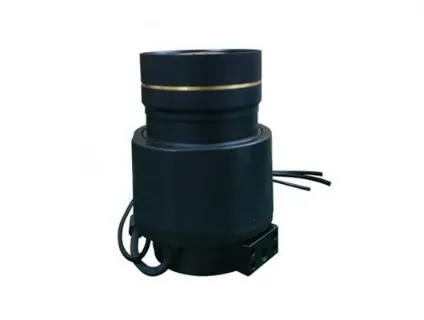
Introduction — The Bridge Between Microscopes and CCTV Cameras
Engineers, researchers, and quality inspectors often link microscope lenses to CCTV cameras these days. It makes sense. This setup boosts imaging capabilities without breaking the bank.
Key advantages stand out. High-resolution imaging comes first. Then there’s the flexibility in configurations. And don’t forget the cost-effectiveness. Many optical manufacturers like AICO have developed precision C Mount Lens solutions for laboratory and industrial vision systems.
That’s the basics. Now, let’s dive deeper.
What Is a C Mount Lens and Why It Matters
Defining the C Mount Interface
C Mount lenses use a standard interface. It’s a 1-inch diameter with 32 threads per inch. Simple as that.
This standard has been around for decades. It started in the film era but stuck around for digital imaging too.
Comparing C Mount to CS Mount
C Mount and CS Mount look similar at first glance. But there’s a key difference. C Mount has a flange focal distance of 17.526 mm. CS Mount? It’s shorter at 12.5 mm.
Mix them up, and focus issues arise. Always check compatibility. C Mount adapters can bridge the gap sometimes.
Popularity in Industrial and Scientific Imaging
C Mount lenses show up everywhere in labs and factories. They’re reliable for machine vision tasks. Think inspection lines or research setups.
Why so common? Versatility. They pair well with various sensors. Plus, plenty of options from budget to high-end.
Imagine trying to inspect tiny defects without one. Tough job.
Understanding the C Mount Adapter — The Key Connector
The Role of the C Mount Adapter
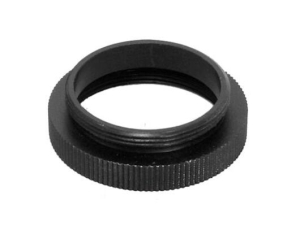
Adapters like these connect mismatched optics. They link microscope lenses to CCTV cameras or industrial setups. In imaging systems, they act as the essential bridge. Without them, components just don’t fit.
Types of C Mount Lens Adapters for CCTV and Microscopes
Several types exist. RMS to C Mount is popular for microscopes. That’s because many microscope objectives use RMS threads.
Then there’s M42 to C Mount. Handy for older lenses. And CS to C Mount for those shorter flange needs. Other variations include T-mount or even custom ones. Pick based on your gear.
When selecting a C Mount Lens Adapter, it’s essential to ensure tight mechanical tolerance. Something AICO‘s optical mounts are engineered for.
Adapters aren’t perfect. Sometimes vibrations loosen them. But quality ones hold steady.
Step-by-Step: How to Connect a Microscope Lens to a CCTV Camera
Setting this up isn’t rocket science. Follow these steps, and you’ll be imaging in no time.
Step 1: Identify the Microscope’s Optical Thread
First off, check your microscope lens. Most use RMS threads. That’s the Royal Microscopical Society standard.
If it’s something else, note it down. Measure if needed.
Step 2: Choose the Correct C Mount Adapter
Match the adapter to your threads. For RMS, grab an RMS to C Mount adapter. Consider material too. Aluminum is lightweight, but brass offers better durability.
Step 3: Attach the Adapter Securely to the Microscope Lens
Screw it on gently. No need to overtighten. A snug fit prevents light leaks. Test for wobble. If it moves, redo it.
Step 4: Connect to the CCTV Camera with a C Mount Lens or Compatible Sensor
Now, attach the whole thing to the CCTV camera. The C Mount should thread right in. Power up the camera. Check for alignment.
Step 5: Adjust Focus and Image Distance
Fine-tune the focus ring. Sometimes add extension tubes for better working distance. Calibrate under actual lighting. It might take a few tries.
One side note: Dust can ruin everything. Clean lenses before starting.
Tips for Achieving the Best Image Quality
Optimizing Focus and Aperture
Start with focal length. Shorter ones give wider views, longer zoom in tight. Set the aperture right. Wider for low light, narrower for sharpness.
Pairing with Light Sources and Cleaning
Good lighting matters. LED rings work well for microscopes. Clean lenses often. Fingerprints smear images fast.
Advantages and Limitations of CCTV Lenses in Micro Systems
CCTV lenses shine in affordability. They handle real-time video smoothly. But limitations? Lower magnification compared to dedicated microscope objectives.Still, for many tasks, they’re spot on.
Common Questions
- Can any CCTV lens work with a microscope? Not really. Check mount compatibility first.
- What magnification to expect? It varies. Typically 10x to 100x, depending on setup.
Professional-grade C Mount Lenses from AICO offer multi-coating and low-distortion optics. Ideal for such hybrid imaging setups.
Ever notice how a small misalignment blurs everything? Happens to the best setups.
Applications of Microscope-to-CCTV Systems
These systems pop up in various fields. Let’s break it down.
Industrial Inspection
Think PCB boards. Spotting tiny solder defects or cracks. Weld points too. Ensures quality in manufacturing lines. Microstructures in metals get examined closely.
Materials Research
Scientists study samples at micro levels. From polymers to crystals. Helps in developing new materials.
Education and Laboratory Observation
In classrooms, teachers demo live views. Students see cells or insects up close. Labs use them for routine checks.
AI Vision and Automated Detection
Pair with software for smart inspections. AI flags defects automatically. Saves time in high-volume production.
One thing: In humid environments, condensation can fog lenses. Keep that in mind.
Conclusion — Why C Mount Systems Remain a Smart Choice
C Mount systems excel in compatibility. They work with tons of gear. Durability stands out too. Built to last in tough settings. Expansion is easy. Add filters or extenders as needed.
In research and industry, their value endures. Cost-effective yet powerful.
As optical integration continues to evolve, companies like AICO are helping engineers bridge classic microscopy and modern CCTV imaging through innovative C Mount solutions.
That’s it. Solid choice for imaging needs.
FAQ
Q: What is a C Mount adapter?
A simple threaded ring that connects microscope lenses (like RMS) to CCTV cameras.
Q: Can any CCTV lens work with a microscope?
No. It must have a C Mount and match the sensor size.
Q: What’s the difference between C Mount and CS Mount?
C Mount has a 17.5 mm flange distance; CS Mount is 12.5 mm. Adapters can convert.
Q: How do I avoid blurry images?
Secure the adapter tightly, clean lenses, and adjust focus under proper light.
Q: What magnification can I get?
Usually 10x–100x, depending on the microscope objective and CCTV lens combo.