
Why License Plate Capture Needs More than Just a Camera
License plate capture plays a key role in many areas. It boosts security, handles parking lot management, controls access points, manages gates, and tracks vehicle flow. ANPR, or automatic number plate recognition, has roots in tech developed for law enforcement and traffic monitoring back in the 1970s. Today, it powers everything from toll booths to smart city systems.
But real-world setups often fall short. High failure rates plague many installations. Costs can skyrocket with unreliable gear. Systems prove unstable, especially under varying light. They react poorly to glare or shadows. Lenses and overall setups demand precision, or the whole thing flops.
This article dives into building a reliable long-range system. It uses a lightweight, low-cost board-level CMOS sensor paired with a 16 mm 12 MP 4K M12 lens. Perfect for small to medium spots like entrances, exits, parking lots, or factory zones. No need for bulky equipment.
At AICO, clients often seek “just a CCTV camera that can read plates”. But real, reliable LPR requires the right lens, imaging setup, and system tuning — more than just resolution specs.
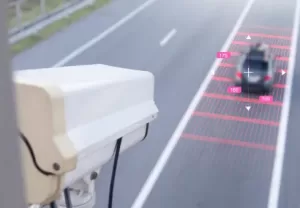
What Makes License Plate Capture Challenging — Key Factors Explained
License plate recognition faces plenty of hurdles. Success hinges on resolution, measured in pixels per meter. Focal length and field of view matter too. Lens distortion and vignetting can blur edges. Vehicle speed adds motion blur. Light conditions shift from day to night, with headlight glare thrown in. IR capabilities, filters, and extra lighting make or break it.
A solid rule of thumb exists: aim for at least two pixels per character stroke on the plate. That means the thinnest line in a letter or number gets captured clearly. Skip this, and recognition drops off.
High resolution helps, sure. Pair it with a narrow field of view and proper focal length for long-range work. But angles matter. Bad lighting or glare? Still a fail. LPR challenges pile up fast in real scenarios.
Ever notice how plates look crisp up close but fuzzy from afar? That’s pixels per meter at play. Lens distortion warps shapes, while poor IR lighting leaves night captures in the dark.
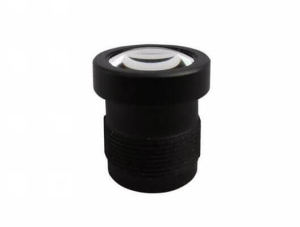
Why a 16 mm 12 MP 4K M12 Lens Is a Cost-Effective Long-Range Solution
M12 lenses teamed with 4K board cameras shine in simplicity. They’re small, light, and cheap. Easy to embed in custom setups or OEM projects. Quick to deploy. Beats traditional bullet cameras with motorized zooms in flexibility.
A 16 mm focal length fits typical lanes, parking areas, entrances, or highway exits. Handles distances around 10 to 30 meters, or even farther. Balances detail capture with enough width to cover the scene.
12 MP or 4K resolution ensures plate characters stay sharp, even at range. The combo of high resolution and right focal length trumps just high res with a wide angle. Wide angles spread pixels thin, losing clarity.
Compare to standard wide-angle or short-focal lenses. Or zoom bullet cams. The 16 mm 4K M12 lens strikes a balance for cost, mid-range use, and long-term stability. Board camera for ANPR? It’s a smart pick.
In internal benchmarks, AICO found that 16 mm 4K M12 lenses offer over 90% detection rate under controlled lighting and setup — making them a reliable, budget-friendly option for parking lots and gated facility entry systems.
How to Set Up Your LPR System with a 16 mm M12 Lens
Setting up takes thought. Break it down step by step.
1. Calculate Pixel Density / Field of View
Start with distance versus pixels per meter, or ppm. Ensure each character’s finest line hits 2-3 pixels minimum. Too low, and software struggles.
Use a simple formula: ppm = (sensor width in pixels) / (field width in meters). For a 50 cm wide plate with 5 cm tall characters, aim for enough resolution to resolve those details. At 10 meters, a 16 mm lens might need 4K to hit 200 ppm. Push to 20 meters? Drop to 100 ppm, but test it.
Adjust based on real tests. Sometimes, a slight tweak in positioning boosts results big time.
2. Mounting / Angle / Illumination / IR / Exposure Settings
Mount the camera straight-on to the plate. Avoid steep upward angles or sharp offsets. Keep tilt under 5-10 degrees, or recognition tanks from distortion.
Lighting and IR illumination for license plate capture are crucial. Daytime brings sun glare; nights add headlight bounce. Factor in overexposure or halos. IR supplements help, paired with proper filters.
Tune camera settings: Shutter speed to cut blur, frame rate for smooth capture, exposure and gain for balance. Enable WDR or HLC to handle high-contrast scenes. Motion blur from speeding cars? Faster shutter fixes that.
Camera mounting for ANPR demands sturdy spots, away from vibrations. A wobbly setup ruins everything.
3. Test & Calibrate — Validate Recognition Effects
Shoot tests with multiple vehicles. Vary distances, lights, speeds, day and night. Track detection rate and accuracy.
Low rates? Tweak focal length, angles, lighting, shutter, or even lane flow. Iterate until solid.
4. When This Setup Might Fail — Limitations You Should Know
High speeds over 50-70 km/h blur plates. Need higher frame rates or pro LPR cams for that.
Extreme lights, night glare, reflective plates, wear, blocks, or tilts cause issues. Add extra IR, multi-angles, or frame bursts to counter.
LPR setup guide stresses testing early. Skip it, and problems sneak up later.
Parking Lot / Facility Entry
Picture a typical parking lot entrance or company gate. Vehicles roll in slow, 5-30 km/h. Lane about 3-4 meters wide. Camera sits 6-20 meters away.
Pair a 16 mm 12 MP 4K M12 lens with decent IR lights, a board camera, fixed focus, and static mount. Hits 95% or better recognition, day and night.
Parking lot license plate capture thrives here. ANPR camera installation example shows how M12 lens based LPR system simplifies things.
One real-world deployment at a mid-size gated community using AICO 16mm 12mp 1/1.7″ F2.8 4k m12 s mount lens showed reliable plate capture for over 90% of vehicles — day and night, without expensive IR bullet cameras.
Getting 4K LPR Right Without Overpaying
Key factors boil down to the right lens, resolution, focus and angles, lighting, solid install, and tuning.
The 16 mm 12 MP 4K M12 scheme stands out. High value for money, easy to roll out, fits mid to long range, compact size. Ideal for bulk deploys.
Long range license plate capture demands smarts, not just spend. M12 4K lens advantage shines in real use. Budget friendly LPR solution? This nails it.
FAQ
Q: What is the best lens for long-range license plate capture?
A 16mm 12MP 4K M12 lens is ideal for long-range license plate capture, offering clear detail over distances of 6–20 meters, suitable for parking lots, gates, and entryways.
Q: How does a 16mm lens help with license plate recognition (LPR)?
The 16mm lens provides a narrow field of view, capturing sharp details of license plates from a distance, ensuring high recognition accuracy in both daytime and nighttime conditions.
Q: Can a 12MP 4K M12 lens be used for license plate recognition?
Yes, a 12MP 4K M12 lens provides the high resolution needed for license plate recognition (LPR) systems, ensuring clear imaging for both stationary and moving vehicles.
Q: What factors affect license plate capture in long-range systems?
Factors include lens focal length, pixel density, installation angle, lighting conditions (IR and daytime), vehicle speed, and camera exposure settings.
Q: How do I set up an LPR system with a 16mm 4K M12 lens?
For optimal setup, ensure proper mounting angle, use appropriate IR lighting for night capture, and adjust the camera’s exposure and shutter speed for clear plate visibility over long distances.