
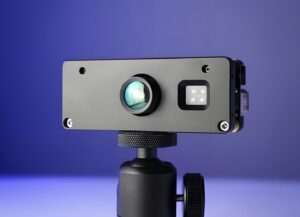
TOF based 3D sensing has changed how machines see depth, but the real results of any 3D sensor setup rely a lot on one main part: the lens. Without a good TOF camera lens, even the best time of flight methods can’t give solid outcomes. These lenses guide infrared light right, cut down on twists, and match up well with sensors. So, they make or break depth sensing correctness.
Role of TOF Camera Lenses in TOF Based 3D Sensing Systems
Importance of Optical Components in Time of Flight Measurement
In time of flight (TOF) setups, IR light goes out, bounces off things, and comes back to the sensor. A TOF lens handles this light path. It gathers the bounced IR light and sends it to the TOF imaging sensor. The clearness and speed of this step depend on lens quality.
A strong IR lens boosts signal power and cuts noise and odd spots. If a lens spreads or soaks up too much IR light, the returning signal gets weak. This makes depth figures unreliable. Also, a lens’s light design affects both distance and sharpness. A bad lens might shorten useful distance or fuzzy details in the view.
Interaction Between Lens Parameters and Depth Sensing Performance
Several basic traits of the lens directly shape how well a depth sensing sensor works:
- Aperture size sets how much IR light comes in, affecting depth exactness in dim spots.
- Focal length manages zoom and work space.
- Field of view (FOV) sets scene coverage—slim FOVs allow farther checks, while broad FOVs grab more space but often with less detail.
Pass through rate is another big factor. Good coatings make sure more IR light hits the sensor, boosting return signal strength. Any twist or flaw in the optics—whether color based, round, or shape based—can mess up depth reads and add mistakes to 3D builds.
Key Design Considerations for TOF Camera Lenses
Optical Path Management in TOF Systems
TOF imaging needs little signal drop along the light path. So, the IR lens must cut inner bounces and spreads. Light coatings made for exact IR waves, like 850nm or 940nm, are key to max flow.
Extra light is another problem. Without right blocks and dark insides, bounces in the light unit can cause ghosts or wrong checks. Smart light path design leads to better signal to noise levels and eases after work loads.
Lens to Sensor Alignment for Accurate 3D Data Capture
Misalignment—even by a tiny bit—can hurt 3D data correctness a bunch. View shift errors show up when the light line doesn’t match the sensor’s pixel setup. This leads to bent or wrong depth maps.
To fix this, tight build rules during put together are vital. Every TOF camera lens must be set dead center and angled right against the sensor flat. This matters a lot in small units where heat growth might move parts over time.
AICO, a professional manufacturer of optical lenses for industrial use, emphasizes high precision alignment in all its IR lens assemblies—ensuring consistent performance in demanding applications like machine vision and automotive sensing.
Influence of Lens Characteristics on System Level Performance
Impact of Optical Distortion on TOF Imaging Sensor Output
Lens distortion—like barrel or pincushion kinds—changes how objects look in space. In TOF setups, this causes bent 3D rebuilds where straight lines might seem curved or item edges get uneven.
While software fixes can mend some distortion, it only works well if lens actions are steady and same across pieces. Low distortion lenses cut this fix work and boost on the spot handling speed.
Measurement Accuracy as a Function of Lens Quality
Better sharpness lenses allow more exact space sampling over the sensor group. This turns into clearer edges and finer item details in depth maps.
Handling color shift—where different waves focus at slight different depths—is also important. Though TOF uses narrow IR light, small wave changes can happen from heat or filter shifts. Well fixed optics keep focus steady across the frame.
Lastly, even lighting counts. A lens that spreads light smooth avoids bright spots or edge dark that could tilt time of flight checks across the scene.
Integration Challenges in 3D Sensor System Design
Matching TOF Camera Lenses with Sensor Specifications
A big setup challenge is making sure the lens’s light traits line up with sensor details. This includes matching focal length to pixel spacing for best field cover and ensuring wave pass matches the sensor’s IR sense curve.
If not matched, you might deal with less range swing, edge dark, or ghost marks that hurt check exactness.
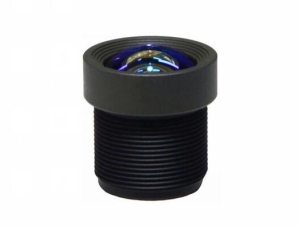
AICO offers a wide range of M12 S-mount CCTV board lenses designed for TOF 3D image sensor camera, ensuring seamless compatibility with common TOF sensors and helping engineers streamline camera module integration without compromising performance.
Considerations for Optical Module Integration into Camera Systems
As devices get smaller—from mobile robots to AR headsets—the challenge grows: how to fit strong optics into tight spots?
Designers often face choices between setup and size. Simple designs may give up some picture quality for smallness. Plus, heat steadiness becomes key; if stuff expands different under warmth, focus moves or lineup drifts can happen.
Strong build design with heat stable stuff is vital for long run trust in small 3D sensor setups.
Enhancing Reliability and Range of Depth Sensing Sensors with Optimized Lenses
Extending Sensing Range Through Optimized IR Lens Design for TOF Sensors
To push the useful range of depth sensing sensors farther, lenses must send as much bounced IR light as possible. High pass glass kinds and multi layer AR coatings help reach this.
Also, adding narrow band filters into the IR lens can cut outside light mess a lot—especially under sun or bulb light—by stopping off band waves.
Improving System Reliability Through Robust Optical Architecture
Real world uses need toughness. That means tough light setups that can take shakes, hits, and temp changes without losing lineup.
Seal from outside—like rings or pads—guards inner parts from dust or wet. These little bits ensure long term trust for outdoor or work uses where stop time costs big.
AICO’s lenses are designed with rugged use cases in mind, offering sealed housings and reinforced mounts suitable for security cameras, automotive ADAS systems, and factory automation setups.
FAQ
Q1: What is a TOF camera lens?
A TOF camera lens focuses infrared light onto a depth sensing sensor in a time of flight system to measure distances accurately.
Q2: Why is lens to sensor alignment important?
Precise alignment ensures accurate depth calculations by minimizing parallax errors and image warping.
Q3: How does lens distortion affect 3D sensing?
Distortion alters perceived object geometry, which can mislead depth measurements if not corrected.
Q4: Can I use any IR lens with my TOF sensor?
Not necessarily—IR transmission properties must match your sensor’s spectral response for optimal performance.
Q5: What makes AICO lenses suitable for industrial use?
AICO specializes in manufacturing high performance lenses with robust mechanical structures tailored for demanding industrial and automotive applications.