
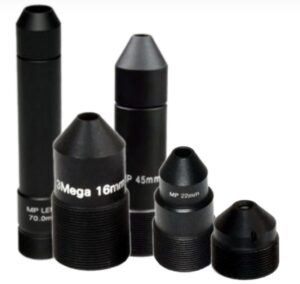
M12 pinhole lenses are changing the area of current watching systems. They provide hidden picture-taking options without the usual light problems tied to small optics. Their small shape, little twisting in pictures, and good fit with machines make them a fine choice for jobs where you need to hide things but keep the view sharp.
M12 Pinhole Lenses in Modern Surveillance
Key Features of M12 Pinhole Lenses
M12 pinhole lenses are built for quiet work and exact results. Their tiny base lets them mix easily into tight setups, like board cameras and IoT tools.
- M12 lens are small-sized lenses with a threaded mount of 12mm. This small build fits well in built-in systems and secret spots.
- The slim opening—often in the F4.0 to F8.0 range—helps with hidden views. It cuts down the lens hole, and it does not lose much in depth of field.
- These lenses usually come with set focus lengths made for watching, from 2.1mm to 70mm. They can go inside different kinds of tight cameras, such as surveillance cameras, drones, or carry-around check tools.
Differences Between Standard CCTV Lenses and Pinhole M12 Lenses
Standard CCTV lenses aim for clear sight and wide areas. But pinhole M12 lenses focus on being unseen.
| Feature | Standard CCTV Lens | M12 Pinhole Lens |
| Size | Larger, visible | Ultra-compact, easily concealed |
| Field of View | Wide-angle options available | Typically narrower, more focused |
| Light Sensitivity | Higher with large apertures | Lower due to small aperture |
| Mechanical Fit | Often C/ CS-mount | M12 thread mount |
Jobs like watching ATMs or elevators gain from the small size and quiet nature of pinhole lenses. There, regular lenses would stand out too much.
Optical Performance Without Distortion
Eliminating Fisheye and Barrel Distortion in Surveillance Imaging
One key trait of M12 pinhole lenses is how they give straight picture lines. Unlike fisheye or wide lenses that add round twists, pinhole types hold lines true and sizes right. This exactness is vital for tasks with item spotting or move catching.
This helps a lot in crime checks too. When you look at saved videos for proof, even small picture bends can cause wrong ideas. With pinhole optics, the view stays true to the real spot. So it makes after-work and court checks simpler.
Image Quality Considerations for Pinhole M12 Lenses
They do great in clear views and small builds. But pinhole lenses deal with some troubles:
- Resolution: High Resolution: With a sharp and clear view, this is usually provided from 5MP to 10MP, even in lenses as small as 12mm or 16mm.
- Aperture limitations: A narrow aperture means less light transmission, which can affect performance in dim environments.
Mechanical Construction of Pinhole M12 Optics
Internal Design Elements Supporting Discreet Surveillance
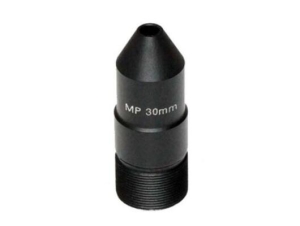
Pinhole M12 lenses often use strong metal covers with heat-proof features. These help last in steady use.
They add parts like IR-cut filters or no-glare layers to handle bad light. An infrared cut-off filter is an optical lens that allows visible light to pass through while blocking or reflecting infrared light.
Mounting happens with threaded M12 mounts. These let safe setup in tight spots, and they fight shakes. That is important in moving or factory places.
Compatibility With Standard M12 Mounts and Camera Boards
M12 lenses follow normal thread rules (M12 x 0.5). So they work well with many camera boards.
They’re commonly used with mini domes, IoT modules, and customized enclosures. However, alignment between sensor and lens must be precise; when the image becomes unclear, the camera’s back focus can be adjusted to change the distance between the CCD chip and the lens reference plane (equivalent to adjusting the position of the human eye’s lens), which can bring the blurry image back into focus.
AICO, a professional manufacturer specializing in optical components for surveillance and machine vision, offers a range of precisely machined M12 lenses engineered for perfect sensor fit and stable long-term use.
Applications Across Surveillance Environments
Use in Covert Security Installations
M12 pinhole lenses get used a lot in:
- ATM machines where obvious camera placement might invite tampering
- Retail anti-theft systems to monitor without drawing attention
- Elevators or tight corridors where space is limited but visual clarity is essential
They let workers watch without warning people. This fits well for habit studies or stopping loss.
Suitability for Smart Devices and Embedded Systems
In home gadgets like door cams or IoT safety units, room is key. Because of the tiny dimensions, mounting it within highly restricted areas is not difficult.
These lenses help AI edge work too. They send no-twist pictures straight to built-in chips. That boosts item spotting rightness.
Advantages Driving the Adoption of Pinhole M12 Lenses
Enhanced Privacy Compliance Through Discreet Observation
In places where seen watching might spark private worries—schools, hospitals, or offices—pinhole builds give a quiet choice. It still hits safety aims.
They aid in following area rules that cut bold watching in touchy spots. Yet they gather needed view data.
Durability and Maintenance Efficiency in Long-Term Deployments
The small base cuts risk of messing or harm. Plus, with less moving bits than zoom types:
- There’s less mechanical wear
- Maintenance cycles are longer
- System uptime is higher
AICO’s portfolio includes durable high-resolution M12 macro lenses that offer superior resolution and sharp focus, ensuring dependable performance across industrial and surveillance scenarios.
Common Technical Considerations Before Deployment
Factors Affecting Lens Selection for Specific Use Cases
Picking the right focus length means checking:
- Installation height and distance from the target
- Desired field of view
- Lighting conditions: indoor setups might manage with fixed aperture; outdoor use might demand IR-cut filters or auto-iris compatibility.
The smaller the f-number, the larger the aperture (a larger aperture allows for shooting in darker environments).
Integration Challenges With Existing Surveillance Infrastructure
Shifting from regular CCTV to pinhole M12 might need:
- Sensor-lens recalibration
- Firmware updates to handle different focal lengths or aperture values
- Mechanical adapters if camera boards use non-M12 mounts
Thankfully, many modern surveillance platforms now natively support M12 threading, streamlining integration.
FAQs
Q1: Are M12 pinhole lenses suitable for outdoor use?
Yes, but they may require additional housing and IR filters to handle variable lighting conditions.
Q2: Can I use M12 pinhole lenses with any camera module?
As long as the module supports M12 threading and has matching sensor size, integration is straightforward.
Q3: How does image distortion compare between fisheye lens and pinhole lenses?
Pinhole lenses offer minimal distortion, ideal for applications requiring geometric accuracy.
Q4: Do all M12 lenses include IR-cut filters?
Not all—check specifications. Some models integrate IR-cut filters; others are filter-ready.
Q5: Where can I find industrial-grade M12 pinhole lenses?
AICO provides a variety of high-performance M12 lenses tailored for surveillance, automotive, and machine vision applications.