
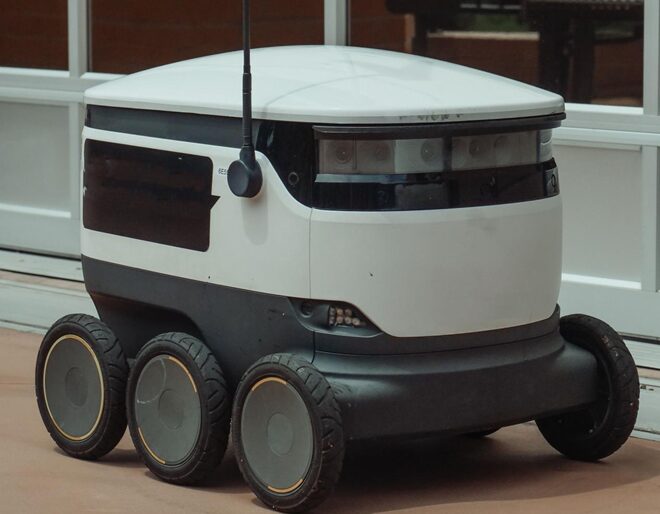
Automated Guided Vehicles rely on vision not just as an extra tool but as a main sensory system. The lens is the very first surface that light hits. This happens before any computer or sensor can read the scene. Without a solid robotics vision lens, even the best camera will guess distances or shapes incorrectly.
Why Do AGV Robots Need High-Performance Vision Lenses?
AGV robots drive through busy and complex factory floors. Their power to see depth, spot blockages, and find their own spot depends fully on clear optics. A top-tier lens makes sure every single pixel holds true space details.
Warehouses often have tricky lighting. The light changes from sunny loading docks to dark storage rows. A lens with great light passing and low errors keeps the picture sharp. The lens decides how well the sensors read the room. Telling a bright pipe apart from a driving forklift relies on good glass. It matters much more than software fixes.
How Lens Specifications Impact AGV Navigation Accuracy
Every small detail on a spec sheet changes real-world driving. Focal length controls how much of the room the camera sees. If it is too narrow, blind spots will show up. If it is too wide, the shapes bend and warp. Lens with low distortion are vital here. AGV navigation often uses SLAM or feature matching. Warped edges will ruin these digital maps.
Aperture size also does a big job. In dark spaces, a wide opening grabs more light. However, it shrinks the depth of field. Things at different distances might get blurry. Bright factory floors with LEDs need smaller openings. This keeps everything sharp from near to far.
Types of Lenses Suitable for AGV Applications
Different jobs need different glass. There is no magic lens for every robot.
Fixed Focal vs. Varifocal Lenses: Which Is Better for Your AGV System?
Fixed focal lenses offer great steadiness. Once you set them, they stay in focus. Shaking or heat will not change them. This fits set routes like warehouse carts on fixed paths. Varifocal lenses give you choices.
Sometimes AGVs work in mixed spaces. Things get close or far away. These adjustable lenses let you change the view without buying new parts. In the real world, builders pick fixed lenses for basic lines. They pick varifocal ones for testing or mixed fleets.
Wide-Angle Lenses for Navigation and Surround Awareness
Wide-angle lens sees a lot more of the room. This helps stop crashes in tight aisles. It also helps at busy corners with people and forklifts. The downside is bent images. Too much bending can trick the driving software.
You have to fix this with careful setup. In huge shipping centers, wide lenses are great. They wipe out blind spots near tall shelves. Small boxes will not hide from the robot anymore.
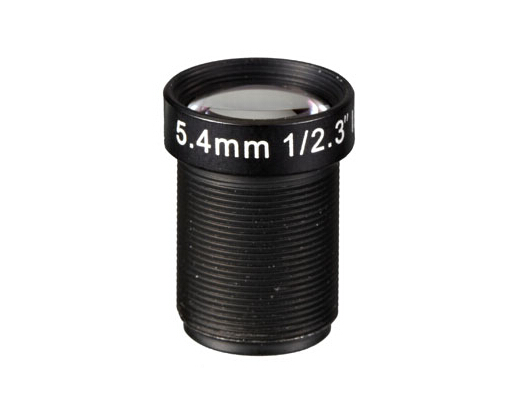
Key Factors to Consider When Choosing a Lens for AGV Robots
Picking a lens for factory robots is about toughness. Factory floors are rough places. You have shaking belts, floating dust, and big heat changes during the day.
What Lens Features Are Essential for Industrial Environments?
Toughness is the top need. A strong metal body stops shock and shaking. This keeps inner glass parts lined up over time. Good seals block out dust. Dirt can ruin the light hitting the sensor. Special coatings cut down glare from metal parts or bright LEDs. This happens a lot in packing centers.
The Importance of Optical Resolution and Sensor Compatibility
Sometimes a lens and a sensor do not match. People miss this until pictures look soft or jagged. Matching the optical resolution is a must. It makes sure every saved pixel holds real details instead of fake blur. High-resolution lenses find edges clearly. This helps robots spot pallets or scan barcodes fast.
Sensor size matching is just as vital. If the lens picture does not cover the whole sensor, the corners get dark. This ruins good data. Tech teams look at MTF charts to check this.
How AICO’s Industrial Lenses Enhance AGV Performance
AICO’s industrial-grade optics show what smart building does for robot eyes. Each lens uses top-tier glass pieces. They cut down bending while keeping great clear lines in all lights. They fit perfectly with standard factory sensors. You get easy wire and mount setups without special parts.
Every unit goes through hard testing. They face shaking, heat changes, and non-stop running. These tests copy real factory life. It proves they last a long time, not just on paper.
For driving parts, the right view angle helps build fast maps. Milliseconds count when dodging a crash. For reading parts, clear pictures matter. High-resolution glass makes sure the software reads barcodes well. It works even in bad light or half-hidden spots in busy hubs.
Future Trends in Optical Technology for AGV Robots
Lens tech is growing right beside AI in robot vision. Smart lenses will soon change focus on their own. They will look at the room instead of using locked gears. This moves us toward smart glass working with smart driving.
Making things smaller is still a big goal (e.g. AICO’s 4.3mm M8*P0.35 mount low distortion 5mp mini cctv board lens ). Tiny but strong camera setups let builders make smaller AGVs. They do this without losing sight distance. New glass coatings fix tricky factory lights. Sunlight often mixes with factory bulbs. Better light control stops color mistakes on advanced sensors.
Everything is coming together. Glass and computer chips are joining forces. Soon, robotics vision lenses might process some picture data before the main computer even sees it.
FAQ
Q1: Why is lens selection critical for robotics vision systems?
Because every choice an AGV makes relies on the camera. Turning and stopping depend on clear pictures from a good lens.
Q2: What happens if the lens resolution doesn’t match the camera sensor?
The picture quality drops. Small details get blurry. This hurts the robot’s ability to drive or check items.
Q3: Are wide-angle lenses always better for navigation?
Not always. They see more space, but they bend the picture. You must fix this bending with software, or the map will be wrong.
Q4: Can telecentric lenses be used outside measurement applications?
Yes, they can. However, their big size and high price make them a bad fit for basic jobs. They are only needed for exact size checks.
Q5: How do emerging smart optics change AGV performance?
Auto-focus and built-in chips will help AGVs react faster. They will handle room changes without waiting for the main computer.