
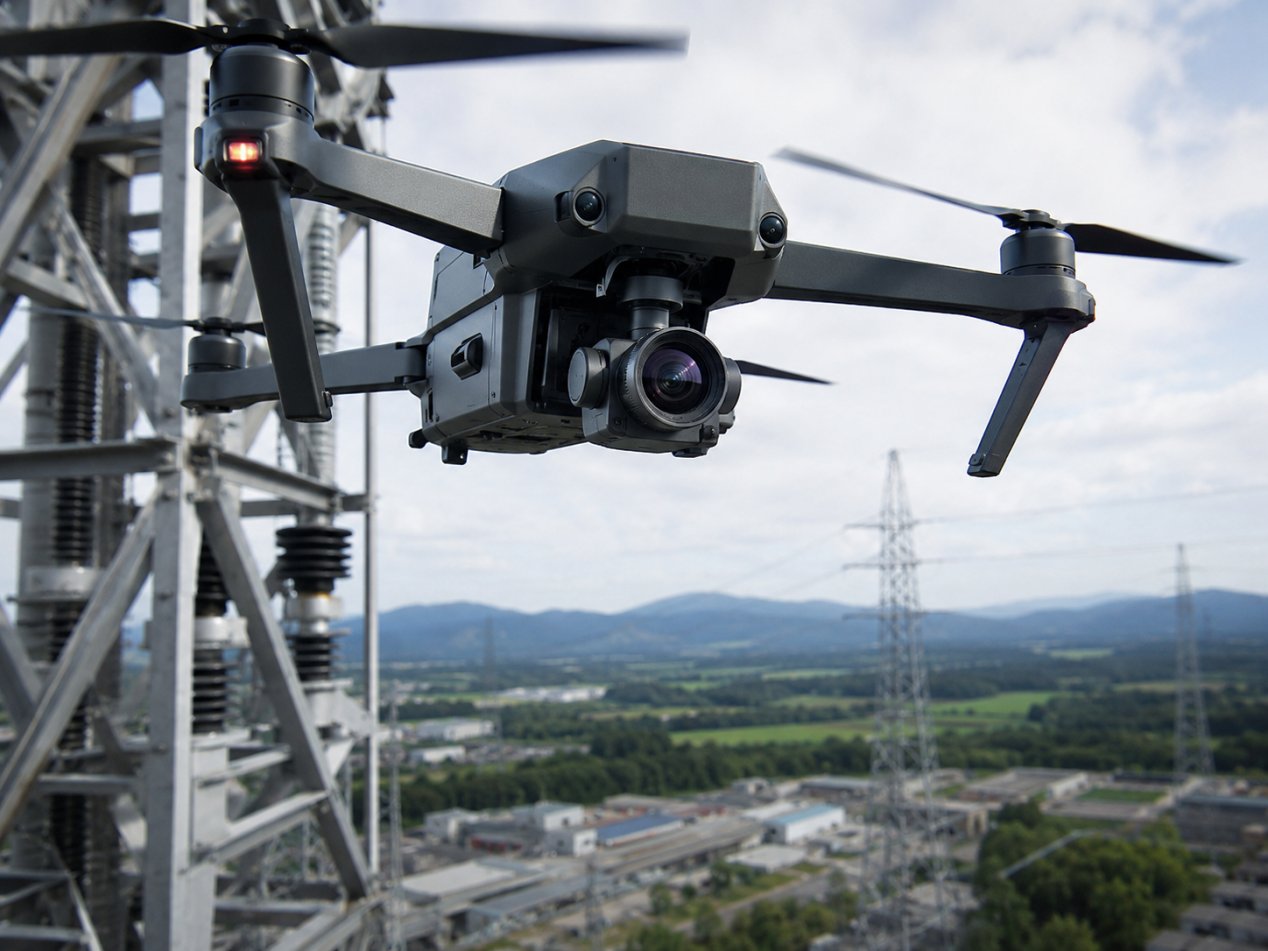
A drone camera lens should never be picked only by focal length or cost. In OEM UAV projects, the lens has to fit the sensor, flight task, image target, module size, and working setting. A lens may look fine during a sample test. But in real flight, it can still bring soft edges, heavy distortion, weak low-light images, or unstable picture quality.
Why Lens Selection Matters in OEM UAV Camera Design
In a UAV camera system, the lens decides how the outside scene enters the image sensor. The sensor captures the final image, but the lens shapes the view first. It affects field of view, light intake, sharpness, distortion, and edge clarity.
Many teams start with one simple question: “Which drone camera lens is best?”
A better question is: “What does the drone need to see?”
A security UAV, an industrial inspection drone, and a mapping drone may all use cameras. Still, their optical needs are quite different.
Start with the UAV Application
Different UAV projects need different image behavior.
Surveillance and Security Drones
Surveillance drones often require a vast viewing range. They also must provide steady picture quality. Furthermore, these cameras should capture helpful details even when lighting conditions shift. You can use a wide-angle drone camera lens for many tasks.
Industrial Inspection Drones
Inspection drones frequently operate near power lines and pipelines. They also fly around bridges, roofs, wind turbines, and industrial facilities. These tasks demand highly clear pictures. Here, distortion becomes a real issue. A low distortion lens helps keep lines and object shapes closer to their true form.
Mapping and Surveying UAVs
Mapping and surveying projects need stable image quality from the center to the edge of the frame. If a lens has strong distortion or blurry corners, image stitching can become harder. Data review may also become less reliable. For this kind of UAV project, teams should look at sensor size, resolution, edge sharpness, and distortion together.
Key Specifications to Check
These specifications should not be viewed one by one in isolation. One change can affect the whole camera module.
Sensor Size and Resolution
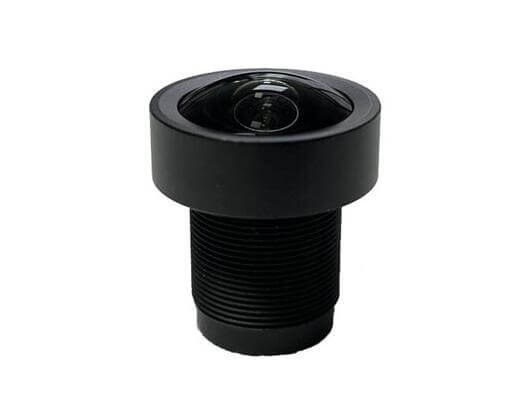
The lens must match the camera sensor. If the image circle is too small, the image may show dark corners or poor edge quality. If the lens resolution is too low, even a high-megapixel sensor will not give the expected detail. In UAV camera design, the lens and sensor should be selected as a pair from the beginning. The AICO 16mp 5k m12 board lens would be a great choice.
Focal Length and Field of View
Short focal lengths create a wider view. They are useful for navigation, security monitoring, and large-area observation. Longer focal lengths give a narrower view and help capture more detail from farther away. Flight height, target size, working distance, and image purpose should all guide the decision.
Aperture and Low-Light Needs
A larger aperture allows more light to enter the camera. This may help in low-light scenes or indoor industrial areas. But aperture also affects depth of field, lens size, and the overall optical design. If the drone needs day-and-night imaging, the project may also need IR-related lens performance.
Choose the Right Lens Type
AICO’s lens categories can support different professional camera applications. For UAV projects, the lens type should match both the image target and the camera module structure.
M12 Lens for Compact UAV Cameras
An M12 lens, also called an S mount lens, is often used in compact camera modules. It is small, light, and suitable for embedded imaging systems.
For drones with limited payload and tight installation space, an M12 lens can be a practical option. It can be used in surveillance drones, compact industrial UAVs, small camera modules, and embedded vision systems.
Low Distortion Lens for Inspection
A low distortion lens is better for projects that need more accurate image geometry. Industrial inspection, mapping support, and machine vision tasks often benefit from lower distortion. Straight lines, edges, and object shapes stay more dependable..
Fisheye and Wide-Angle Lens for Broad Coverage
Fisheye and wide-angle lenses help capture a larger scene. They are useful for navigation, panoramic monitoring, situational awareness, and security patrol tasks.
The trade-off is distortion. Some projects can accept this because wide coverage is more important. Other projects may need lower distortion or software correction.
C Mount and CS Mount Lens for Professional Systems
Some UAV camera systems may need C mount or CS mount lenses, especially when the design uses larger sensors or a more industrial camera structure. These lenses may not be the lightest choice, but they can offer more optical flexibility.
OEM Factors Before Final Selection
A lens may perform well in a simple lab test. Real UAV operation is different. Drones face vibration, temperature changes, outdoor light, dust, moisture, and repeated takeoff impact.
Before confirming a drone camera lens, OEM teams should check:
- Lens size and total module weight
- Focus stability during vibration
- Operating temperature range
- Assembly tolerance
Please provide specific details. You will need to provide the sensor model and sensor size. You will also need to specify the required resolution and working distance. Finally, please describe the usage environment and any custom lens requirements.
Conclusion
Picking a drone camera lens is more than just a basic technical task. This single part heavily impacts your final image quality. It also affects the overall camera structure and flight performance.
AICO provides a wide variety of optical lens products. These items work very well for surveillance and industrial vision setups. They are also highly effective for automotive, machine vision, and professional camera applications. Many OEM UAV projects require specific parts to function properly.
These parts might include M12 lenses, low distortion lenses, or fisheye lenses. You might also need C mount lenses, CS mount lenses, or even custom lens support. In all these situations, AICO is ready to assist. Our team will help review the most suitable options for you.
FAQs
Q1: What lens is suitable for compact drone camera modules?
A: An M12 lens is often suitable because it is small, light, and easy to integrate into compact UAV camera modules.
Q2: Why is low distortion important for UAV inspection?
A: Low distortion helps keep lines, shapes, and edges more accurate. This matters when images are used for inspection, mapping, or machine vision analysis.
Q3: Is a wide-angle lens always better for drones?
A: No. A wide-angle lens captures more area, but it may also create more distortion. It fits monitoring and navigation, while detailed inspection may need another lens type.