
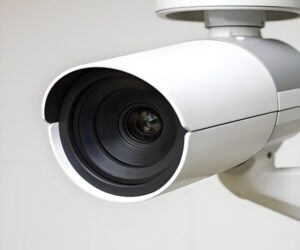
Picking between a 3MP and a 4K CCTV lens is not only about figures — it is about lining up your watching aims with the proper amount of sharpness, price, and setup power. Basically, if you need sharp spotting and lasting good quality, 4K is better. Yet for basic watching or cheap setups, a 3MP lens works fine still.
Understanding CCTV Lens Resolutions
What is a 3MP CCTV Lens?
A 3mp cctv lens grabs pictures at around 2048×1536 pixels. This gives good clearness for many business and home uses. Understanding the security camera lens can be a tricky process. Though the numbers listed with the security camera lens seem simple enough, it is more confusing to know the implications behind those numbers. These lenses often go with fixed or varifocal cameras. Fixed lenses have a set focal length, while varifocal ones let you change things for zooming in or making the view bigger.
Common spots to use them include little shops, car parks, and work rooms. In these places, noticing motion or regular doings matters more than grabbing tiny face bits. A 3MP picture offers enough clearness to tell apart folks and items at average ranges. And it does this without eating up too much bandwidth or space.
What is a 4K CCTV Lens?
A 4K CCTV lens makes very sharp high-definition video at about 3840×2160 pixels — four times more sharpness than a normal Full HD stream. High-resolution like 2K or 4K camera lenses are suggested because they can provide really clear pictures and extra bits. These lenses get made for spots that need exactness — airports, banks, city watching nets, or factory check setups.
For example, AICO manufactures precision-engineered optical components such as the ACTM1232IR12MP model with specifications including 12mp M12 4K Board Wide Angle Lens and a wide angle horizontal field of view of around 130°. Lenses like these keep even brightness over big areas. They also hold sharpness from one side to the other. This is important for pro watching arrangements.
Comparing Image Quality
Resolution Differences Between 3MP and 4K Lenses
Resolution sets how much sharpness each picture can have:
| Lens Type | Resolution | Pixel Count | Relative Detail Level |
| 3MP | ~2048×1536 | ~3 million | Medium |
| 4K | ~3840×2160 | ~8 million | Very High |
The focal length of a cctv lens can range from 1.0mm to 70mm, but the common focal length for fixed-lens security cameras is 2.8mm, 4mm, 6mm, and 12mm. More pixels mean better textures — car tags stay easy to read even if you zoom in on the screen. Going from 3MP to 4K also improves range of light and color richness in different light setups.
Impact on Surveillance Footage Quality
The gap shows up most when you watch back or check proof. With a 3MP lens, faces far away might get a little fuzzy. On the other hand, a nicely set 4K system lets you spot things picture by picture. It even works in dim light when matched with a good sensor like Sony’s IMX415. The aperture is a significant term for security camera lenses because it can affect the camera’s depth of field — the distance between the nearest and farthest objects in a scene that appears sharp in an image.
In bad light, bigger openings (lower F-stops) help both kinds do better by allowing more light in. But many new 4K lenses add special layers and better glass setups (like AICO’s multi-element construction). So they keep good contrast even in mixed light situations.
Cost Considerations for CCTV Lenses
Price Comparison Between 3MP and 4K Lenses
- 3MP lensescost little — great for big setups where number counts more than super high clearness.
- 4K lensesrun much higher in price because of stricter making rules and better optics needed to handle tiny pixel spaces.
Varifocal lenses tend to be more expensive than fixed lenses. Brand name affects cost too; companies like AICO put a lot into optical precision testing to make sure each piece keeps steady modulation transfer function (MTF) performance across production batches.
Budgeting for CCTV Installation with Different Lenses
- For small work spots or houses: lots of cheap 3MP cameras handle big areas well.
- For key spots (doors, money desks): fewer but sharper 4K ones give better proof details.
Looking at long-term worth, putting money into higher clearness cuts down future change costs as watching rules move to UHD types.
Installation and Compatibility Factors
Compatibility with Existing Surveillance Systems
Not every recorder handles straight 4K input flows; older DVRs might shrink them down on their own. C and CS mount are two available options when it comes to mounting a lens to a CCTV security camera. Making sure the mount kind matches (C-mount vs CS-mount) stops focus slip problems that hurt picture clearness.
Changing from old or low-clearness IP systems could need better bandwidth network stuff or NVRs that can deal with bigger data rates.
Ease of Installation for 3MP vs 4K Lenses
Putting in either kind is alike in body — both usually use threaded M12 or CS mounts — but getting the focus right varies. A small slip on a high-clearness sensor shows right away on the screen as softness near the sides. Pro setters often say to tweak the back focus space during setup with live screen zoom looks.
Choosing the Right CCTV Lens for Your Needs
Evaluating Security Requirements Based on Location
Before picking between clearness levels: think about coverage spot size, light steadiness, and watching goal. Wide-angle security cameras with a focal length of 2.8mm or shorter work best for large areas such as parking lots, backyards, warehouses, construction sites. Meanwhile long-focal telephoto options suit corridors or gates where detail accuracy matters more than width.
Balancing Quality, Cost, and Practicality in Decision Making
There is no single fix that fits all here — at times mixing both clearness levels gives the best cover: broad-view cheap units backed by aimed high ones at tight spots. As one optical engineer once said half-jokingly during calibration testing: “You don’t need an IMAX shot of your driveway.” Yet having one clear frame could make all the difference after an incident.
AICO’s way shows this balance idea; their product line spans from compact board-level M12 optics to full industrial-grade assemblies designed for machine vision — proving that practical engineering often beats sheer specification chasing.
FAQs
Q: Is a 4K CCTV lens worth upgrading from my current setup?
Yes if your system supports it; you’ll gain sharper details useful for identification tasks.
Q: Can I mix different resolutions in one surveillance network?
Absolutely; hybrid NVRs allow combining various streams without issue.
Q: Do higher megapixels mean better night vision?
Not necessarily — sensor sensitivity and aperture size play bigger roles than resolution alone.
Q: How often should I clean my CCTV lens?
The dirt, dust, or spiderwebs on your security camera lens could lead to distorted and blurry images. Cleaning twice yearly using microfiber cloth is generally sufficient.