
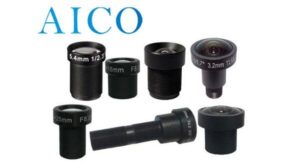
Finding the right M12 lens can totally transform how well a camera watches its surroundings. The secret is grasping how each lens kind—such as fisheye, wide-angle, low-distortion, or telephoto—impacts the field of view, sharpness, and work in various light settings. If you are setting up a CCTV security system or building a machine vision arrangement, the proper M12 lens mount gives clear pictures and steady function.
Understanding M12 Lenses
What is an M12 Lens?
M12 lens are tiny lenses with a 12mm threaded mount. These small optics work well in CCTV cameras, robots, and check systems. They fit many sensor sizes. In fact, they suit industrial needs in CCTV watch systems, check cameras, and robots. They offer good resolution—usually from 5MP to 10MP—and fit easily into tight spaces like drones or handheld tools.
Why M12 Lenses are Referred to as Board Lenses
People call them “board lenses” since they connect right to camera circuit boards. They do not need big casings. This suits built-in uses like small CCTV parts or IoT gadgets. Board lenses beat traditional C-mount lens or CS-mount lens. Those use bigger casings and adjustable parts. Yet board lenses keep things simple and cheap. They still hold optical accuracy.
Types of M12 Lenses
Fisheye/Ultra-Wide Lenses
Fisheye M12 lens give very broad fields of view—often over 180°. They fit great for all-around watching. In such cases, one camera covers big spots like parking areas or store floors. The 1.55mm 195 deg F2.0 12mp 4K M12 fisheye lens with 1/2.3″ format shows high resolution lets it catch the whole scene. It leaves few blind spots.
Wide-Angle Lenses
Wide-angle types mix coverage and bend less than fisheye ones. They show up often in offices, storage places, and car watch systems. There, a medium view width works without strong curve problems. e.g.: 1.8mm F2.8 1/2.7″ DFOV 135 degree widest distortionless 4k 8mp m12 s-mount straight cctv board lens – ACBQ18288MP
Low-Distortion/Machine Vision Lenses
Exact imaging needs little bend. The 1/1.8″ 16mm F2.8 / F5.6 / F8.0 5mp m12 s mount machine vision FA board lens is a solid pick. It gives better resolution and a bit longer focal lengths than the 12mm one. These setups help right measures in auto check systems. There, small shape mistakes can mess up outcomes.
Low-Light/Fast Lenses
Low-light M12 lenses have big openings (low f-numbers). They let more light hit the sensor. So, this boosts sight in dark spots or at night. It matters a lot for outside CCTV setups or factory lines that run all day and night. e.g: 1/2.7″ big aperture F1.0 3.9mm 5mp m12*p0.5 s mount star-light cctv board camera lens
Telephoto/Narrow Angle Lenses
Telephoto choices zoom on far-off items with tight view angles under 30°. Folks wanting more bend and longer focal length might pick the Focal length 70mm 1/1.8″ F3.5 8mp 4k M12 s mount telephoto cctv board lens for far field aiming and small ITS. It is another strong choice. These serve for plate reading or edge watching. There, details count more than wide area.
Pinhole Lenses
M12 pinhole lens use very small openings. This lets them hide behind panels or ATM machines for secret watching. Pinhole lenses, with a size of just a few millimeters, can go in hidden spots. They lose some light from the tiny holes. But their skill to stay unseen makes them key for safety jobs.
Infrared (IR) Corrected/Lens-Free Filters
Infrared-corrected types keep focus steady over visible and IR light ranges—key for day/night cameras with IR lights. Infrared cutoff filters matter for CCD and CMOS sensors. Those can pick up IR light, which leads to color changes or shows images humans cannot see. IR-corrected optics cut color shifts. They also ensure sharp pictures in mixed light.
Choosing the Right M12 Lens for Optimal Coverage
Factors to Consider When Selecting an M12 Lens
When picking between fisheye, wide-angle, or telephoto kinds, think about:
- Focal Length: Sets the field of view; short ones give wider scenes but less detail.
- Aperture Size: Affects brightness; lower f-values help low-light work better.
- Field of View: Sets the cover area; match it to your watch distance.
The focal length sets the field of view size. A shorter focal length means a bigger field of view and wider watch range. But far items look less clear. A longer focal length means a smaller field of view and narrower watch range.
By matching these parts to your use, you get the best picture sharpness. This holds true whether you use a fixed-focus CCTV lens or a cctv camera varifocal lens that lets manual tweaks.
Practical Tips for Selecting the Best Lens for Your Needs
First, check the light in the place—inside vs outside needs different opening focus. Weigh broad cover against close detail; at times, two matching cameras beat one super-wide one.
AICO—a professional optical manufacturer specializing in industrial and surveillance lenses—builds many M12 models. They back high-resolution sensors up to 10MP with bend rates under 0.2%. Their design teams make optics for standard board cameras and advanced machine vision setups.
FAQs About M12 Lenses
Usual focal lengths go from around 1.0 mm (super-wide) to 100mm (telephoto). Shorter ones bring wider cover; longer ones boost item detail from afar.
Clarifying Differences Between Similar Lens Types
Fisheye lenses go past normal wide-angle. They bend image edges on purpose to get almost half-sphere views—great when full awareness beats shape correctness.
Specialized Uses for Certain M12 Lens Types
Low-distortion lens shine in factory quality check lines. There, measure exactness is vital. AICO’s low-distortion line gives resolutions up to 10 MP with bend under 0.1%. It backs auto checks without shift in setup over time.
Each project gains when optical picks match exact work needs—from hidden pinhole setups guarding doors to IR-corrected optics keeping steady color through day and night—all in the flexible world of the small but strong M12 lens group.