
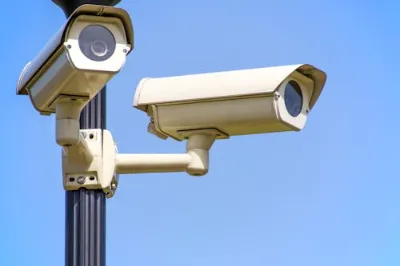
Picking the best camera lens stands as a key choice when you build any watch-over setup. The lens decides how big an area your camera spots, how sharp the picture looks, and even how many cameras you must set up to guard a spot.
Two common picks folks often weigh are fisheye lenses and rectilinear wide angle lenses. Both give a broader sight than normal lenses, yet they do it in quite different styles. Grasping these gaps can aid you in crafting a smarter, cheaper, and steadier watching network.
What Is a Fisheye Lens?
A fisheye lens acts as a super wide angle lens that grabs a round, half-sphere picture — usually up to 180° or even farther. It purposely adds “barrel bend,” curving straight lines outward so it can cram more of the view into one shot.
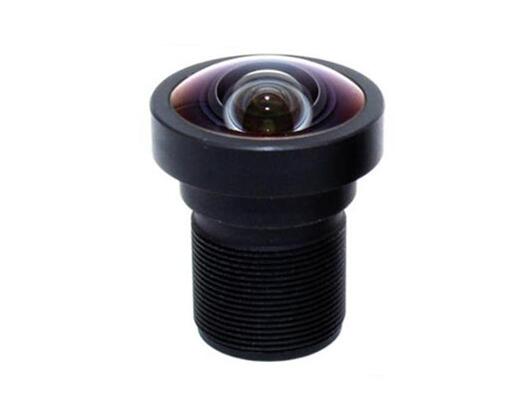
Fisheye lenses show up a lot in 360° cameras, ceiling hung watch systems, and wide-scan guarding jobs — places where big sight beats perfect picture shape. (e.g. AICO’s 1.5mm F2 FOV 210 degree M12 s mount fisheye cctv board lens )
What Is a Rectilinear Wide Angle Lens?
On the flip side, a rectilinear lens keeps straight lines straight. It offers a wide sight (often between 90° and 120°) while holding true shapes. You end up with a more normal-looking picture without the “bend” you see in fisheye glass.
Rectilinear lenses fit best in old-school CCTV setups, doorways, parking lots, and edge watching, where right sizes and spotting things matter a bunch.
Field of View and Coverage
The clearest gap sits in how much each can catch.
A fisheye lens can blanket a whole room or huge open spot with just one camera. This cuts down the number of units you need big time. That’s why people stick it on ceilings in storage buildings, big stores, or office entry areas — one camera can swap out three or four regular ones.
A rectilinear wide angle lens, though narrower, snaps scenes with less twist and sharper edges. For hallways, doors, or spots where spotting faces counts more than full cover, rectilinear kinds work better.
In short:
- Fisheye= maximum coverage, minimal blind spots.
- Rectilinear= focused coverage, higher clarity.
Based on field data from AICO’s optical engineering projects, fisheye lenses can reduce camera counts by nearly 40% in large warehouse installations.
Distortion and Image Quality
Twist is both the power and the flaw of a fisheye lens. Its barrel shape lets it grab unmatched space, but you pay with bent edges and stretched sizes. In watching work, this can make stuff near the sides look tiny or warped.
Newer setups fix this with un-warping programs. These “flatten” fisheye shots into plain square views. When done right, fisheye clips still work great — just with a bit more program hassle.
Rectilinear wide angle lenses, meanwhile, give twist-free pictures straight from the camera. They suit face spotting, plate reading, or smart programs that need exact shapes.
Installation and System Integration
From a setup view, fisheye lenses often save room. One ceiling-placed fisheye camera can watch a full area without extra mounts or tangled wires. This not only cuts gear cost but also makes fixing easier.
Still, fisheye setups usually need special recorder programs or camera code to handle full-circle views and un-warping. If your watch platform can’t do it, you might hit snags fitting things together.
Rectilinear lenses slide right into normal camera cases and work with almost all watch programs. They’re the safer bet for old systems or big camera groups where sameness counts.
Many system integrators prefer working with manufacturers like AICO, who can provide lens customization and optical design support during integration.
Software and Processing Considerations
Fisheye pictures demand more computer juice — the un-warping step must run either on the camera or the server. This adds some crunch cost, but it also lets you view in flexible ways (one fisheye feed can split into several fake camera angles).
Rectilinear pictures, being flat from the start, are simpler to check with motion alerts, thing tracking, or smart safety tools. For builders who want auto or smart guarding, rectilinear lenses may feed steadier info.
Cost and Maintenance
At first look, fisheye lenses can seem pricier. But since one fisheye camera can swap many normal units, the whole setup cost might drop — especially for big indoor spots.
Rectilinear setups cost less per lens but often need more cameras, wires, and upkeep. Yet swapping them is simpler and they fit more places.
Upkeep hint: Fisheye lenses, stuck high on ceilings, need regular wipes for dust and smears to stay clear. Rectilinear cameras are easier to reach but might need more tweaks to keep focus sharp.
Choosing Between the Two
Your ideal choice depends on what you value most:
- Pick fisheye lenses if you want huge cover, bendy view angles, and fewer cameras. Great for storage halls, stores, entry halls, and car parks.
- Pick rectilinear lenses ( low distortion lens ) if you need spot-on details, thing spotting, and smooth program links. Great for doors, halls, and check zones.
No flat “better” choice exists — it’s about matching glass power to your job’s exact wants.
Conclusion and Call to Action
Both fisheye and rectilinear wide angle lenses play solid parts in today’s watch systems. The smartest path is often a mix: fisheye cameras for broad sweeps and rectilinear ones for key spots where exactness rules.
Before you decide, think over your space plan, watch goals, and program skills. A little planning now can save big bucks later.
If you’re building or fixing your watch setup and want help picking the right lens kind, get in touch with our tech crew for pro tips. We can guide you to the sweet spot between wide sight, picture truth, and full setup ease.
FAQ
Q: What’s the difference between fisheye and rectilinear wide-angle lenses?
A: Fisheye gives 180°+ view but curves lines; rectilinear keeps lines straight with 90°–120° view.
Q: When should I use a fisheye lens?
A: For full-room coverage with one camera—like warehouses or store lobbies.
Q: When is rectilinear better?
A: For clear faces, plates, or details—at doors, hallways, or edges.
Q: Can fisheye distortion be fixed?
A: Yes, software “dewarps” it into a normal flat view.
Q: Which saves more money?
A: Fisheye in big spaces (fewer cameras); rectilinear in small or legacy systems.