
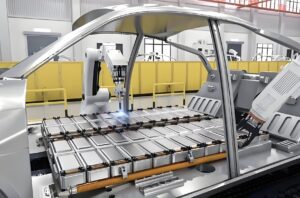
As electric vehicle (EV) production aims for faster output and better accuracy, making sure of solid imaging in hidden light ranges has turned key. Short wave infrared (SWIR) fixed focal length lenses have become a main tool for spotting inside battery problems, boosting output, and smoothing out robot work. These lenses give the exactness and steadiness that tough EV making needs.
Understanding SWIR Fixed Focal Length Lenses in EV Manufacturing
What Is a SWIR Lens and How It Functions
SWIR lenses work for short wave infrared imaging, usually in the 900–1700 nm wavelength band, so they fit with InGaAs sensors. Unlike systems for visible light, SWIR can go through some stuff like silicon, plastic, or electrode layers. And that shows inner parts not seen by regular cameras.
The lens projects the optical picture of the scene onto the image sensor’s surface. Then, it turns into an electrical signal. After that, it goes through analog to digital change. So, it becomes a digital image signal. Next, a digital signal processing chip handles it. Finally, it sends to a computer through a USB port for more work. And you can see the image on a screen.
In EV making, folks often use SWIR lenses to check battery electrodes, weld lines, and material strength during putting together. These are important spots where hidden flaws can badly hurt safety and how well things work.
Characteristics of Fixed Focal Length Lenses
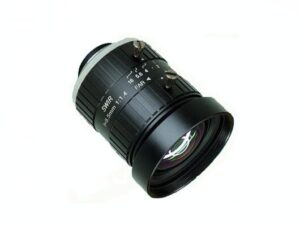
A fixed focal length SWIR lens, or prime lens, keeps the same focal length. It brings several benefits for factory use.
- More optical steadiness and less moving bits
- Better image clearness at set distances
- Steady fieldof view without focus shift
Compared to zoom or varifocal lenses, which give options but might add optical unevenness, fixed focal length lenses suit fast check lines where you need trustable results.
Since focal length and field of view match one to one, a certain focal length means a certain field of view. So, when picking a lens focal length, think hard about what matters more. Is it seeing details? Or having a big view area? If details count, pick a long focus lens. If seeing wide scenes up close, go for a wide angle SWIR lens with shorter focal length.
Enhancing EV Battery Manufacturing Through SWIR Imaging
Penetration Capabilities of SWIR for Layered Battery Inspection
SWIR’s special strength is in seeing through some materials. In battery making, SWIR wavelengths get through electrode layers and sealed packs. This lets you spot inner misfits, foil peeling, or weld gaps. It works for pouch, cylindrical, and prismatic cell types.
This way of looking inside without harm is vital during stacking and sealing steps. There, you can’t check with normal light.
Improving Yield with Non-Destructive Testing Methods
SWIR checks cut down waste by finding problems early. Live imaging lets you have inline feedback that tweaks settings right away. It allows auto sorting of flaws to skip needless stops. Plus, it cuts manual quality checks, which makes the whole process smoother.
The skill to spot tiny changes without opening the cell fits with current slim making aims.
Key Optical Specifications for Industrial SWIR Lenses
Typical Performance Metrics for Fixed Focal Length SWIR Lenses
SWIR lenses in EV making often have focal lengths from 8mm to 50mm. They balance zoom with area cover.
These lenses must match InGaAs sensor rules working in the 900–1700 nm range. They usually support high clear outputs that fit modern machine vision needs, like 4K or more. This makes sure no flaw gets missed.
The lens resolution should be greater than 50 pairs of lines. The smaller the camera’s target area, the higher the lens resolution.
Mechanical Compatibility and Mounting Standards
Factory setups like standard mounts for quick setup. The C-mount format is common. The distance from the lens mounting reference plane to the focus is 17.526mm.
Toughness is just as important. Lenses have to handle shakes, heat changes, and factory dirt without losing performance. Manufacturers like AICO build their optics with that toughness in mind. They offer items fit for rough factory spots.
Benefits of Fixed Focal Lengths in Automated EV Production Lines
Consistency and Repeatability in Imaging Results
Fixed focal length designs stop focus shift, which is a usual problem in ongoing runs. With a steady field of view, each item gets captured the same way. That’s crucial when checking parts over thousands of units.
Precision Alignment for Machine Vision Applications
These lenses let exact setup between camera sensor and robot arms or check stages. Better edge sharpness helps detailed jobs like weld line checks or electrode lining up.
Speed Optimization Across Inspection Workflows
Since no need to refocus or tweak zoom for each part, these lenses speed up image grabbing. This backs fast belt speeds without losing clearness.
Simplification of System Architecture and Integration Efforts
By skipping motorized zoom parts or changing focus units, system setup gets much simpler. Software tuning becomes easier when optical settings stay fixed.
Long Term Cost Efficiency and Maintenance Reduction
Fixed lenses have fewer mechanical parts. As a result, they show lower breakdown rates over time. Downtime from lens care or resetting drops. Total owning cost goes down over the system’s life.
AICO, as a professional lens manufacturer specializing in optical components for automotive and machine vision applications, develops fixed focal SWIR compatible lenses tailored for these exact demands.
Optimizing Workflow Efficiency with SWIR Vision Systems
Seamless Integration into Smart Manufacturing Platforms
Current EV plants use AI based check software that looks at live imaging data. SWIR lenses must give steady outputs that fit well with AI flaw spotting methods, cloud based checks, and auto reject or fix spots.
Supporting Predictive Maintenance Through Visual Data Insights
By checking long term patterns in material looks or flaw rates via SWIR imaging, you can do predictive upkeep. This means early fixes before big failures happen. It saves time and stops pricey halts.
FAQ
Q1: What makes a c mount lens suitable for industrial use?
A C-mount lens has standardized threading and back focal distance that ensures compatibility with industrial cameras and stable mechanical mounting.
Q2: Why are fixed focal length lenses preferred over zoom lenses in EV factories?
They offer consistent imaging without the need for adjustment, making them ideal for high speed, automated inspection lines.
Q3: Can SWIR lenses detect internal battery defects?
Yes, their ability to see through layers allows detection of misalignments or delamination within battery cells.
Q4: What focal lengths are commonly used in EV production?
Lenses with focal lengths like 8mm to 50mm are commonly used depending on inspection distance and field size.