
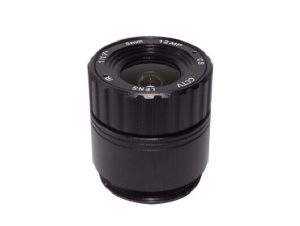
Focal length plays a big role in any surveillance setup. It decides how much area a camera covers and how clear distant details appear. Think about it: get it wrong, and you might miss key spots or end up with blurry faces. That’s why picking the right one matters so much.
Now, why zero in on a 5 mm focal length? It hits a nice balance for many common spots, like doorways or small yards. Not too wide, not too narrow. It grabs a good view while keeping things sharp enough to spot details.
This article breaks it down step by step. First, the basics of focal length. Then, how it fits different scenes. After that, why 5 mm might be your go-to, plus tips on setup and pitfalls to dodge. Stick around for some real-world pros and cons, and a quick FAQ at the end.
What Is Lens Focal Length?
Lens focal length is the distance from the lens’s optical center to the image sensor. In CCTV terms, it shapes what the camera sees.
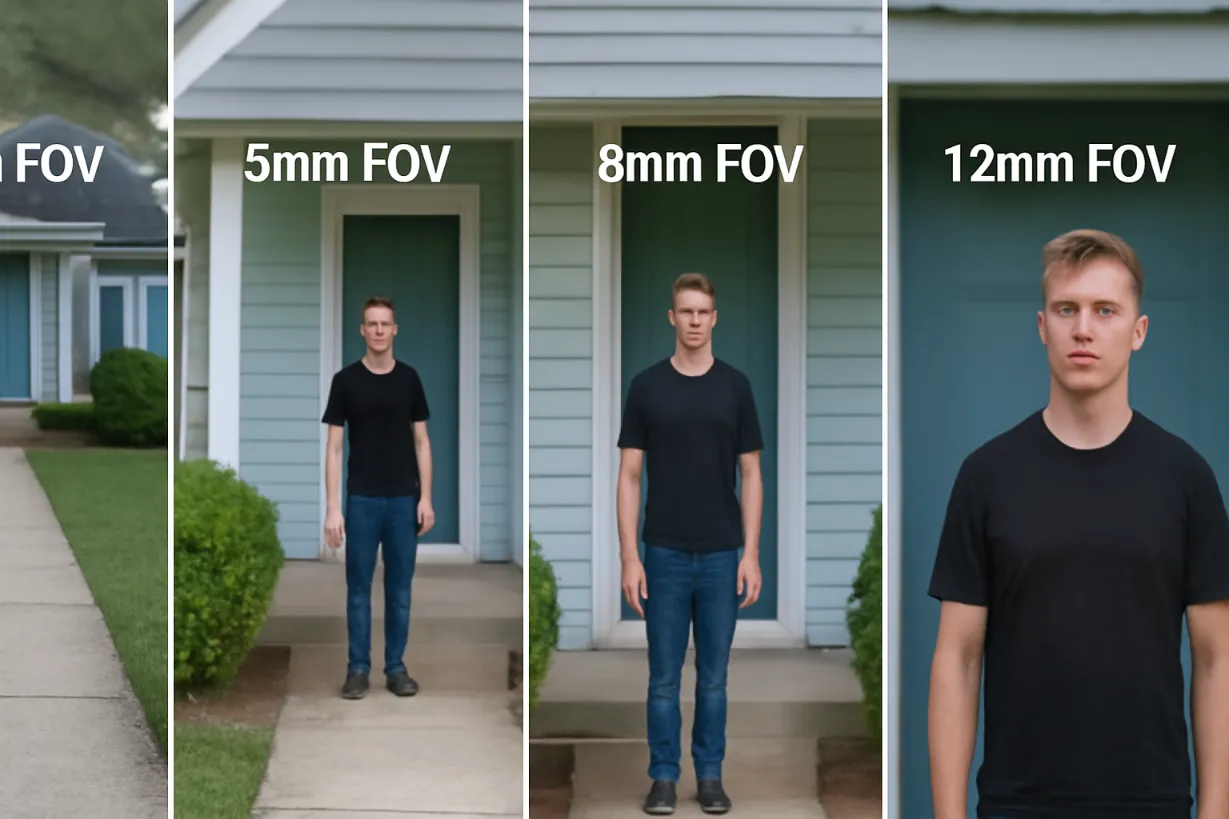
Short focal lengths, like 2.8mm lens , give wide views but lose detail at distance. Longer ones, say 12mm lens, zoom in tight for far-off clarity but cut the overall scene. It’s all about trade-offs.
AICO, a camera specialist, points out that focal length ties directly to field of view and coverage distance. A wider angle might seem great for big areas, but it can distort edges or make identification tough.
Don’t just chase high resolution like 4K or 12MP. The lens has to match the sensor size and the space you’re watching. Over on IP Cam Talk forums, folks often say wide-angle lenses catch everything but fail when you need to ID someone. “Wide-angle comes at a cost… not being able to identify who did it,” as one user put it. High pixels mean nothing if the focal length doesn’t deliver usable images.
Focal Length and Sensor Matching
For a 1/1.7″ sensor, common in many 4K cameras, focal length guides like those for 5 mm lenses help avoid mismatches. Pair it wrong, and you get cropped views or wasted resolution.
Common Scenarios for Focal Length Choices
Different spots call for different focal lengths in surveillance cameras. Let’s compare a few.
Short ones, around 2.8 to 4 mm, work best indoors. Hallways, small shops, or tight rooms. They spread the view wide, catching movement across the space. But at 10 meters out, faces might blur.
Mid-range, like 6 to 8 mm, suits yards or driveways. Narrower field but better detail for license plates or people at medium range.
Longer focal lengths, 12 mm and up, handle distant monitoring. Think parking lots or perimeters. Sharp far away, but you miss side action.
Key Factors in Each Scenario
- Range and Distance: Measure what you need to cover. A 2.8 mm might span 20 meters wide at close range, but details fade fast.
- Face Recognition: Crucial for security. Shorter lenses struggle here beyond a few meters.
- Installation Notes: Height matters. Mount too high with a wide lens, and you get overhead views with little ground detail.
Here’s a quick table to visualize:
| Focal Length | Field of View Width (5m) | Recommended Distance | Typical Scenes |
|---|---|---|---|
| 2.8 mm | About 10-12 meters | Up to 5-7 meters | Indoor rooms, corridors |
| 5 mm | Around 6-8 meters | 5-15 meters | Entrances, small yards |
| 8 mm | 4-5 meters | 10-20 meters | Driveways, gates |
| 12 mm | 3-4 meters | 15+ meters | Long paths, perimeters |
This CCTV lens focal length guide shows how 5 mm fits right in the middle for versatile use.
Why Choose a 5 mm Fixed Focal Length Lens?
For setups with 12MP 4K cameras, CS-mount, and 1/1.7″ sensors, a 5 mm lens stands out. It’s not the widest or the longest, but that middle ground makes it ideal for many jobs.
How to choose focal length for CCTV 5 mm lens? Start with your space. It offers a field of view that’s broad enough for coverage but focused for details. Compared to super-wide 2.8 mm, it reduces distortion and sharpens mid-range shots. Versus 8 mm or longer, it’s cheaper and easier to set up, with less need for precise aiming.
Best Applications for 5 mm
When to use a 5 mm focal length CCTV camera? Perfect for entrances with hallways, outdoor small courtyards, front doors, or garage entries. Distances often hit 5 to 15 meters. Here, 5 mm CCTV lens coverage distance and field of view shine: wide enough to see the whole area, sharp enough for faces or plates.
Selecting 5 mm fixed lens vs varifocal lens for security camera? Fixed wins on simplicity. No zooming means no ongoing tweaks, stable quality, and lower cost. Varifocals are flexible but can drift or need constant adjustment.
Ever notice how some installs go south because of overcomplicating? Sticking with fixed 5 mm keeps things straightforward, especially for DIY folks.
Installation and Setup Guide
Before mounting, measure your spot. What’s the distance to key areas? How wide does it need to be? Common gripes include “view too narrow” or “can’t see faces clearly.”
For a 5mm CS-mount CCTV lens, what field of view? On a 1/1.7″ sensor, expect about 70-80 degrees horizontal. Matches well without cropping.
Step-by-Step Tips
- Match Sensor and Lens: Confirm the 1/1.7″ size. Mismatch leads to dark edges or lost view.
- Mounting the CS Interface: Align carefully. Twist on secure, then fine-tune focus.
- Height and Angle: Aim for 2.5-3 meters high. Tilt down slightly to cover ground without sky waste.
- Night Considerations: Infrared helps, but focal length affects how far it reaches. Test in low light.
5 mm fixed lens CCTV installation tips and mistakes: Avoid mounting too high—that narrows effective view. Don’t ignore angle; flat mounts miss lower areas. And always check sensor compatibility first.
One quirky thing: sometimes folks forget about weather if outdoors. Seal that CS mount tight against moisture.
Advantages and Limitations of 5 mm Lenses in Real Surveillance
5 mm fixed focal length CCTV lens advantages? Balance is key. It covers mid-distances without sacrificing too much detail or view.
Costs less than varifocals, too. Less fiddling means quicker setup. Fits most everyday scenes like home entrances or small businesses.
But limits exist. For 30 meters plus, it falls short on clarity. Or massive areas like big warehouses—might need wider.
Quick Checklist for 5 mm Suitability
- Distance: 5-15 meters?
- Width: Up to 8-10 meters?
- Needs: Face/plate ID?
- Budget: Tight?
- Environment: Indoor/outdoor mix?
Best focal length for 12MP 4K CCTV camera 5 mm? Often yes, for that sweet spot.
Compare to varifocals: More flexible, but pricier and prone to issues. Or longer lenses: Great for distance, but blind to sides.
Conclusion and Next Steps
Picking focal length boils down to measuring your space, grasping view versus distance, and matching camera specs.
5 mm shines as the sweet spot for mid-range surveillance—like entrances, yards, garages. It balances everything without overkill.
Measure your setup. If it fits, grab a 5mm 1/1.7 inch 12mp 4K CS Mount IR Correction CCTV Lens . Follow the guide for smooth install.
Got questions? Reach out for pro advice on selection.
Appendix: FAQ
Common queries on 5 mm CCTV lens for surveillance camera selection.
Q: My monitoring distance is 15 meters wide by 8 meters—will 5 mm work?
Yes, typically. It covers that with decent detail. Check the table in section two for more.
Q: Installing in a 3-meter high hallway—will the view be too narrow?
Not usually. Tilt it down. See installation tips in section four.
Q: Why not go for 4 mm for wider coverage?
4 mm broadens the view but blurs details faster. 5 mm CCTV lens focal length guide for 1/1.7″ sensor suggests it for better balance.