

A fisheye lens can usually handle the work of several fixed CCTV cameras. It covers big areas, gets rid of blind spots, and makes setup simple. All this comes in one small device. That’s why security experts are more and more choosing this super wide-angle choice for good monitoring in open or tricky spots.
Understanding Fisheye Lenses in CCTV Systems
What Is a Fisheye Lens and How It Works
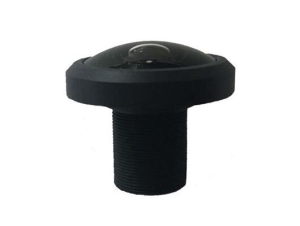
It belongs to the special group of super wide-angle lenses. It features a curved lens that sticks out in front with a focal length of around 6 mm to 16 mm. It provides a broad view with 180 degrees of sight. Sometimes, it reaches up to 230 degrees. This special design creates a round or twisted panoramic picture. And it offers a ball-shaped view that copies how fish see their world.
It also makes a barrel twist in the frame. This gives the image bent edges. This happens because the lens copies the curved eye of a fish. So, it gives us a fisheye look at our surroundings. For security uses, this wide field of view lets one camera watch a whole room without any mechanical turning or tilting.
Types of Fisheye Lenses Used in CCTV
Fisheye lenses come in various kinds:
- A full-frame fisheye lens makes images that fill the rectangular frame. It shows the typical twist of a fisheye. It bends the lines from the center and they narrow toward the edges.
- A circular fisheye lens makes a round image. The image inside the circle is usually surrounded by a black square or a bit rectangular frame.
Based on your setup, you might pick between diagonal coverage (full-frame) or true circular 360° views.
Comparing Fisheye Lenses and Multiple Fixed Cameras
Field of View Coverage Comparison
One of the best reasons for using fisheye lenses is their power to see everything from a middle point.
Security cameras often use fisheye lenses to get a bigger view of the area. This allows one camera to cover larger spaces. It reduces the number of cameras needed to watch every spot. In fact, a single fisheye lens can effectively replace 3–4 standard fixed cameras. But this depends on where you put it and how high the ceiling is.
This panoramic edge is especially useful in open places like lobbies or store floors. There, blind spots are not okay.
Installation and Maintenance Efficiency
Setting up one camera instead of four means fewer cables, fewer mounts, and less time to set things up. That leads to quicker setup and fewer places where things can go wrong.
Fewer devices also mean lower long-term care. You’re not going up ladders four times as much to clean lenses or fix power problems.
Image Quality and Monitoring Capabilities
Fisheye lenses have gotten much better in resolution. Many now support high-megapixel imaging with digital zoom.
Although twist is built-in, most modern NVRs support dewarping software. It changes curved images into flat, easy-to-use views. This is great for checking details later.
Cost Advantages of Using a Fisheye Lens Setup
Equipment Cost Savings Over Time
Let’s talk about numbers. Instead of buying four separate fixed cameras, mounts, power supplies, and cables, you manage with just one unit. That’s fewer devices and fewer extras.
This isn’t only about starting costs—it’s savings in the long run too. AICO, for example, makes professional-grade fisheye lenses designed just for industrial and surveillance needs. Their simple lens designs help cut down a lot on hardware costs for installers.
Operational Cost Reductions
Running four cameras all day and night uses more power and takes more storage space than a single good fisheye setup.
By catching everything in one frame at smart compression rates and covering all angles well, you cut both your power bill and your storage needs.
Here’s how it compares:
| Setup Type | Devices | Power Consumption | Storage Needs |
| Fisheye Camera | 1 | Low | Optimized |
| Fixed Cameras | 3–4 | Higher | Higher |
Ideal Use Cases for Fisheye Lens Cameras
Best Environments for Fisheye Camera Deployment
Fisheye cameras do great in spaces that need full-room sight without blocks:
- Retail stores (aisle and register coverage)
- Warehouses (inventory zones)
- School classrooms (student monitoring)
- Hotel lobbies
- Parking lots with overhead poles
Door viewer – A door viewer, more commonly known as a peephole, employs fisheye lenses to give the person a larger field of vision even through a small hole.
They’re also widely used in environments that benefit from wide area awareness with minimal equipment—think museums or exhibition halls.
Limitations to Consider Before Choosing a Fisheye Lens
That said, fisheyes aren’t always perfect:
- The images show some optical distortion, having curved lines at the edges of the frame.
- Not ideal for zooming in on distant objects.
- Narrow hallways may still require standard or varifocal setups.
Key Differences Between Varifocal Lenses and Fisheye Lenses
How Varifocal Lenses Work in CCTV Systems
Varifocal lenses let you change focal length by hand or automatically to zoom in or out without moving the camera spot. This makes them handy tools for focused monitoring.
When to Choose Varifocal Over Fisheye Lenses
If your aim is to watch entry points, hallways, or license plates at a gate, then varifocal is better. AICO also manufactures precision-engineered cctv camera varifocal lens options that work well in such scenarios where focal flexibility is more important than field coverage.
Factors to Consider Before Switching to Fisheye Cameras
Compatibility With Existing CCTV Infrastructure
Before changing your whole system, check if your NVR supports dewarping functions and high-resolution input from fisheye feeds. Otherwise, you won’t be able to fix distorted images during playback.
Installation Positioning for Maximum Effectiveness
Mounting is key. Putting it in the center of the ceiling gives you even coverage. Wall mounting can still work but cuts total sight.
Avoid corner spots unless you’re going for partial room views only.
Common Questions About Fisheye Lens Cameras in Security Systems
Do Fisheye Images Appear Blurry at the Edges?
The images show some optical distortion, having curved lines at the edges of the frame. This isn’t necessarily blur—it’s curvature due to barrel distortion. Resolution at the edges depends on sensor quality and lens design.
Where Should a Fisheye Camera Be Installed?
Best spot? Dead center on the ceiling. That gives you symmetric 360° coverage with minimal occlusions. Higher ceilings help reduce blind spots directly beneath the camera.
Will a New Lens Fit My Current Security Setup?
Most CCTV setups follow C-mount or CS-mount standards. As long as your camera housing matches your lens specs (e.g., 1/2” sensor with 1/2” lens), compatibility issues are rare.
Is Technical Support Available After Purchase?
Leading manufacturers like AICO back their products with expert support teams who understand industrial-grade optical systems. If you’re unsure about mounting types or system integration, reach out early.
What Is the Shipping Timeframe for Orders?
Lead times depend on your location and stock status. Typically, industrial suppliers offer dispatch within 3–5 business days for standard models.
A fisheye lens isn’t just another camera—it’s an all-in-one surveillance strategy. Whether you’re upgrading an old system or designing from scratch, understanding its strengths can save time, money, and effort.