
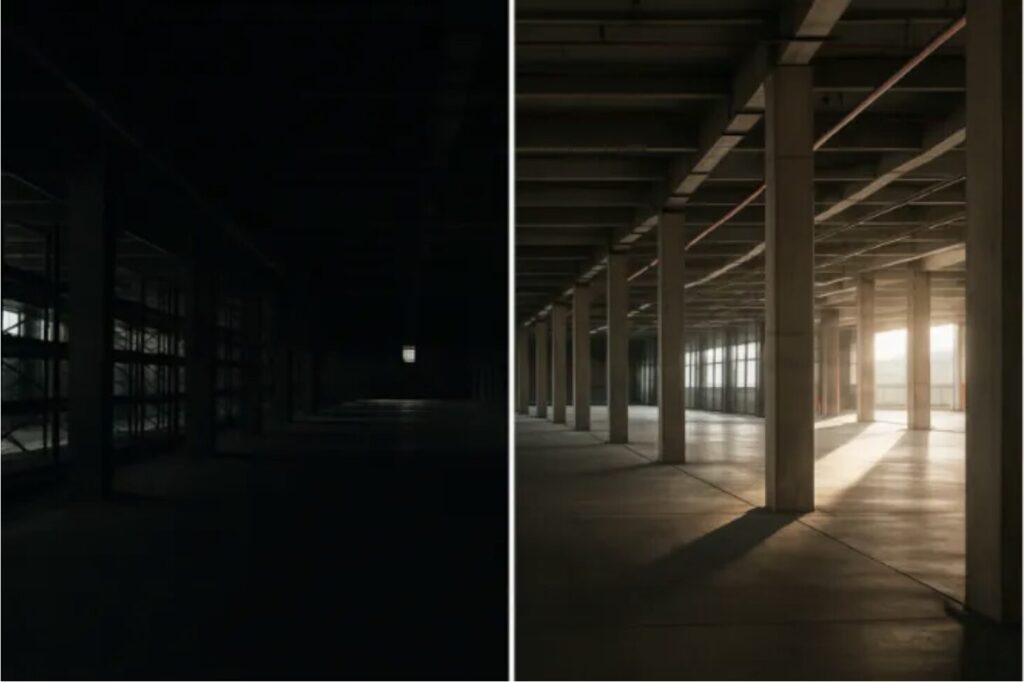
Low light machine vision setups struggle to capture clear details. High contrast imaging demands a balance between dark and bright areas. Industrial camera lens choices play a big role here.
F1.8 C mount lens options shine in tricky spots. Auto iris C mount lens tech handles shifts in brightness. Low light challenges pop up often in industrial setups. High contrast scenes can throw off even solid cameras.
Why Low Light and High Contrast Scenes Are So Difficult for Vision Systems
Nighttime factory yards buzz with activity but dim lighting. Warehouses often have spotty illumination from overhead bulbs. Parking lots turn shadowy after dusk, making surveillance tough.
Traffic intersections deal with headlights flashing against dark backgrounds. Entrance gates for access control face similar issues, especially at dawn or twilight.
Low light CCTV lens systems in these spots frequently underperform. Factory automation vision needs reliable captures round the clock. Traffic monitoring relies on crisp images to track vehicles accurately.
What “Low Light” and “High Contrast” Really Mean for Cameras
Illuminance measures how much light hits a surface. Brightness contrast shows the gap between lit and shaded parts. Shadows clash with strong glare in many environments.
Regular lenses falter here. Overexposure washes out highlights. Underexposure hides details in the dark. Noise creeps in when boosting sensitivity. Motion blur happens with slow shutters.
High contrast imaging pushes limits. Dynamic range and exposure controls try to cope, but weak lenses drag the whole system down.
Many industrial projects seen at AICO involve exactly these kinds of low light and high contrast environments.
Key Lens and Camera Specs That Affect Low Light and High Contrast Performance
F1.8 lens designs boost light gathering. Industrial camera lens specs tie directly to performance. Dynamic range and exposure tweaks make or break tough scenes.
Why Aperture Matters: F1.8 vs F2.8 vs F4.0
F number indicates aperture size. Lower numbers mean wider openings. More light floods in. Take F1.8 versus F2.8. The F1.8 pulls in about twice the light. Compare to F4.0, and it’s four times more.
Big apertures cut noise in dim spots. Faster shutters freeze action. No need to crank up gain levels. F1.8 C mount lens excels here. Low light performance improves noticeably.
Auto Iris vs Manual Iris in Changing Light Conditions
Auto iris adjusts the aperture on the fly. It senses scene brightness and tweaks accordingly. Manual iris stays fixed. Fine for steady indoor light, but outdoors or near windows? Not so much. Sun shifts mess up exposure.
Auto iris C mount lens keeps things even. Automatic iris handles swings in illumination. Changing light becomes less of a headache.
Sensor Size, Dynamic Range and HDR/WDR
Pair lenses with sensors like 1/1.8 inch formats. Matching ensures sharp edges and full coverage. HDR camera modes stack exposures for better range. WDR camera tech smooths out extremes in one go.
High contrast imaging benefits from this combo. Lenses feed clean light; cameras process the rest.
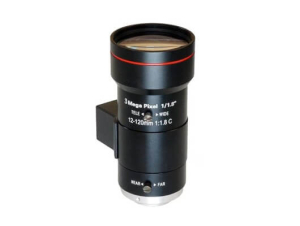
How F1.8 Auto Iris C Mount Lenses Solve These Problems in Practice
F1.8 12-120mm auto iris C mount zoom lens tackles real world snags. Low light machine vision gets a lift. High contrast imaging turns manageable.
Wide Aperture for Cleaner Images in Low Light
Wide openings speed up shutters. Lower gain means less noise. Images stay crisp. Think nighttime license plate reads. Or spotting flaws in dimly lit workshops.
F1.8 C mount lens delivers here. Low light performance ramps up. Industrial camera lens swaps make all the difference.
Auto Iris for Stable Exposure in Changing Light
Entrance gates see sunrises and spotlights. Loading docks shift from bright bays to dark trucks. Window side lines face glaring reflections.
Auto iris C mount lens adapts instantly. Automatic exposure holds steady. Changing lighting conditions don’t force constant tweaks. Less time fiddling with settings. More focus on the task at hand.
Pairing the Right Lens with HDR/WDR Cameras
Upgrade the camera alone?
Often not enough. A solid lens pulls its weight. HDR camera pairs amplify details in shadows and highlights. WDR camera setups handle gradients smoothly. High contrast imaging thrives on this match up.
For example, a F1.8 12-120mm auto iris C mount manual zoom varifocal lens for 1/1.8″ from AICO combines a fast aperture with an automatic iris, making it easier to keep exposure stable in mixed lighting.
How to Choose an F1.8 Auto Iris C Mount Lens for Your Application
Choose C mount lens with care. F1.8 C mount lens fits specific needs. Industrial camera lens selection shapes the outcome.
Step 1 – Your Scene: Distance, Field of View, and Motion
Working distance sets the baseline. Field of view covers the area needed. Target sizes vary; motion speeds dictate shutter demands.
Factory automation vision hinges on these basics. Get them wrong, and the setup falters. Sometimes scenes evolve mid project, adding twists.
Step 2 – Check Sensor Size and Resolution
Match to sensor size, say 1/1.8 inch. Resolution dictates pixel density.
Industrial camera lens must align. Mismatches blur edges or crop views oddly.
Step 3 – Decide on Fixed vs Zoom C Mount Lenses
Fixed focal lengths suit locked in setups. Zooms offer wiggle room.
C mount zoom lens adds versatility. F1.8 C mount zoom handles varying distances. Flexibility pays off in uncertain projects.
Step 4 – Think About Installation and Maintenance
Mounts and space constraints limit options. Wiring runs can complicate things.
Industrial camera setup needs easy access. Maintenance down the line? Factor in dust, vibrations, quick swaps.
In many projects managed by AICO, the original lenses were replaced with the 12-120mm F1.8 auto aperture C mount zoom lens, which allowed for one step adjustment of the field of view and exposure.
Practical Checklist for Your Next Low Light or High Contrast Project
Low light machine vision checklist streamlines prep. High contrast imaging demands foresight. Auto iris C mount lens checks key boxes.
Quick Questions to Ask Before You Buy a Lens
- Light levels steady or wild?
- Backlight a factor?
- Camera sensor size and res?
- Zoom or fixed focal?
- Auto iris a must?
Simple Tests You Can Run in the Lab
Mimic light swings in the lab. Backlight setups test extremes.
Snap comparison shots. Check noise, detail retention, exposure hold.
Designing for Reliable Vision in Tough Lighting Conditions
Low light machine vision trips up many systems. High contrast imaging adds another layer of hassle. F1.8 auto iris C mount lens offers a straightforward fix.
Pair it with the right camera. Cut down on tweaks and upkeep. Next project? Assess light and lens choices upfront for smoother runs.
FAQ
Q: How does an auto iris lens improve exposure?
An auto iris lens automatically adjusts the aperture to prevent overexposure and underexposure in changing light.
Q: Do auto iris lenses replace HDR/WDR functions?
No. Auto iris controls light entry; HDR/WDR manages sensor dynamic range. They work best together.
Q: Is a zoom C mount lens good for machine vision?
Yes. A C mount zoom lens offers flexible field of view adjustment for prototyping and variable working distances.
Q: How do I confirm compatibility with my camera?
Match the lens to your mount type, sensor size, and resolution to ensure proper coverage and sharpness.