

The rising need for automotive M12 (S-mount) lens isn’t just luck. It’s fueled by the field’s move to smarter, smaller imaging setups that offer accuracy and dependability. These lenses mix tiny size with strong optical results. That makes them key in today’s cars with ADAS, dashcams, and night vision cameras.
Characteristics of M12 (S-Mount) Lenses
The M12 lens group is built for tight imaging spots where room and mass matter a lot.
Design and Structure of M12 Lenses
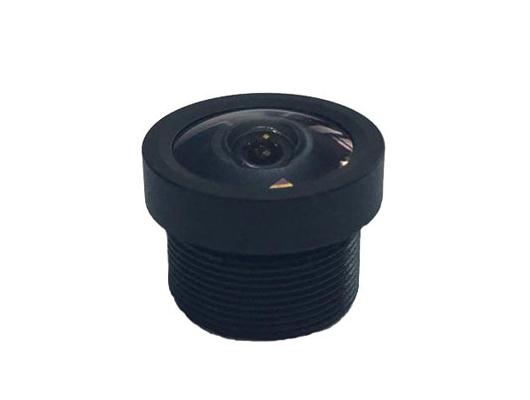
M12 lens are small-sized lenses with a threaded mount of 12mm. This tiny build lets them slide easily into tight areas like car parts or small CCTV boards. Their set focal length gives steady image quality. It does so without added mechanical parts. That’s perfect for uses that value steadiness more than zoom options. Wide-angle setups often go beyond 100° field of view. They allow full scene views. This is vital for driver help and watch systems.
Optical Features of M12 Lenses
Current camera lens M12 CCTV night vision plans focus on sharpness and flexibility. High Resolution: They offer a crisp and bright sight, usually from 5MP to 10MP. These lenses fit well in tasks that need tiny details with good precision. They also work with many sensor sizes, from 1/3″ to 2/3″ image sensors. That means they match various camera setups. Plus, lots of types have low-distortion glass and layers tuned for infrared passage. This is key for dim light or night vision work in cars.
Applications of M12 Lenses in Automobiles
Car imaging counts on exact optics to boost safety and awareness of surroundings. M12 lenses have turned into the top pick. They balance price, size, and standard well.
Advanced Driver Assistance Systems (ADAS)
In ADAS parts, automotive M12 lenses take a main job in grabbing lane lines and car areas just right. Lane departure warning setups need wide-angle views to spot road edges well. In the same way, adaptive cruise control uses these lenses to keep steady aim on cars ahead. This helps control speed safely in changing situations.
Cameras for Reverse Assistance
Backup cameras with M12 optics improve sight during parking moves. They give controlled wide looks at the back area. These lenses cut blind spots a lot when backing up cars. That’s a big help in stopping slow crashes in city spots or snug parking areas.
Monitoring Blind Spots
Side-view mirror cameras now add small S-mount optics to watch nearby lanes all the time. They provide live visual info during lane shifts. This aids drivers in making safer choices. Even when old mirrors don’t cover blind areas due to build issues.
Dashcams for Event Recording
Dashcams depend on ongoing recording power backed by tough lens parts. The strength of an M12 lens keeps image grabs steady. It does this even with shakes or heat changes common in car settings. Saved video often turns into important proof for insurance or legal papers after road events.
Comparing M12(S-mount) with C-mount and CS-mount Lenses
Before picking an optical setup for a car or safety tool, knowing mount differences is key.
Differences in Mounting and Usage
The M12 mount often uses a threaded link to fix the lens to the camera body. It has a flange focal distance of about 12 mm. That’s shorter than both C-mount (17.526 mm) and CS-mount (approximately 12.5 mm). While C- and CS-mounts show up in bigger watch cameras, the tinier thread size of the M12 fits best for small parts in cars or drones where space is short. C-mounts lead in factory check setups; CS-mounts appear in usual CCTV; S-mounts shine in built-in car systems that need small size.
| Lens Mount | Thread Diameter | Flange Focal Distance | Common Application |
| M12 (S-Mount) | 12 mm | 12 mm | Automotive cameras, mini-CCTV |
| C-Mount | 25.4 mm | 17.526 mm | Industrial & scientific imaging |
| CS-Mount | 12.5 mm | 12.5 mm | Security surveillance cameras |
Advantages of M12 Lenses Over Other Mounts
Their chief pluses come from low cost and simple setup. No big adapters needed. And they work well across various car types or built-in bases. The threaded build gives safe hold even with shakes. It keeps the whole setup light and cheap compared to bigger mounts like C-type lenses in lab tools.
How to Ensure Superior Quality M12 Lenses?
Picking a trusted supplier decides if your imaging setup gives steady outcomes over time.
Factors Influencing Lens Quality
Lens stuff and coating standard affect sharpness and light passage right away. Bad coatings cause shine or color flaws in bright light. Making accuracy counts too. A small error can lead to focus shifts across heat changes or shake loops common in car spots.
Tips for Selecting High-quality M12 Lenses
Buyers ought to check supplier fame via papers like ISO9001 or ISO/TS16949. AICO sticks to strict ISO9001, ISO/TS16949, and ISO14001 Quality Management Systems. This way, every lens gives good work and lasts. Looking at user thoughts helps confirm real-life strength in rough spots like dust or quick heat jumps on roads.
Checks for match with current camera sensors make sure resolution fits. Using a high-megapixel sensor with a low-grade lens wastes chance for detail grabs.
About AICO
As one of the top 10 optical lens manufacturers in China, AICO is well recognized for providing industries all over the world with high-quality, cost-effective M12 macro lens. Their portfolio includes high-resolution options like the 8mm 20mp F4.0 m12 s mount compact FA board lens optimized for clarity across various lighting conditions.With more than 20 years of manufacturing experience, AICO has gained client trust by offering lenses that combine advanced optical technology with reliable performance and affordable pricing. For businesses seeking dependable automotive imaging components—from ADAS modules to dashcams—AICO provides globally certified solutions backed by responsive technical support and flexible customization services tailored to evolving mobility technologies.
FAQs About M12 (S-Mount) Lenses
Q: Can I use zooming or auto-focus features with an M12 or S-mount lens?
Most automotive-grade models have fixed focal lengths; however manual focus adjustments are possible during installation.
Q: How durable are M12 lenses?
They’re built from robust glass-polymer combinations designed for long-term exposure to vibration and heat cycles typical inside vehicles.
Q: How can I use an M12 lens on a C-mount camera?
Adapters exist but may alter back focal distance slightly; users must ensure proper spacing for accurate focusing.
Q: In addition to automobile installation, what are the other applications of an M12 lens?
They’re widely used in CCTV security systems, robotics vision modules, drones, and industrial inspection setups due to their small form factor.
Q: Are there any alternatives for M12 lenses?
C- or CS-mount variants can substitute when larger housings allow; however they lack the same compactness needed for embedded automotive units.