
Overview of M8 and M12 Lens Mounts
Technical Specifications of M8 and M12 Lens Mounts
The M8 and M12 lens mounts are widely used in compact imaging systems, particularly in board cameras. The “M” refers to the metric thread size. An M8 mount uses an 8mm diameter thread, while an M12 mount uses a 12mm diameter thread. Both use a threaded connection to secure the lens to the camera module, allowing for easy interchangeability.
The M12 mount typically features a flange focal distance of 12mm, which is the distance from the lens mounting surface to the image sensor. This short distance enables compact lens designs suitable for small devices. The M8 mount, being smaller, allows for even more compact configurations but may have limitations in terms of optical performance due to its reduced physical dimensions.
Common Applications in Imaging Systems
M8 and M12 mounts are found in various applications including surveillance systems, medical endoscopes, robotics, drones, and industrial inspection tools. Their compact size makes them ideal for embedding into devices where space is limited.
Compatibility with Board Cameras and Sensor Sizes
M12 lenses are compatible with a wide range of sensor formats up to 2/3″, making them versatile for high-resolution imaging. These lenses, in particular, find a perfect industrial fit in CCTV surveillance systems, inspection cameras, and robotics. In contrast, M8 mount lenses are more commonly paired with smaller sensors due to their physical constraints but excel in ultra-compact modules (e.g. AICO’s 4.3mm M8*P0.35 mount 5mp low distortion mini cctv board lens).
Features and Benefits of the M8 Mount Mini Board Lens and Endoscope Lens
Design Characteristics of the M8 Mount Mini Board Lens
M8 mount mini board lens is designed for ultra-compact imaging systems. They often feature fixed focus and fixed aperture due to size limitations but provide sufficient clarity for close-range tasks such as barcode scanning or embedded vision modules.
Application Scenarios for the M8 Endoscope Lens
In medical imaging, particularly in minimally invasive procedures like endoscopy, the small diameter of the M8 even M6 mount lens is crucial. Its tiny form factor allows it to be integrated into probes that navigate through narrow body cavities while still delivering usable image quality.
Advantages in Compact Optical Systems
The primary advantage of using an M8 mount mini board lens or endoscope lens lies in its ability to fit into extremely tight spaces without compromising system integrity. It’s especially valuable where weight reduction and spatial efficiency are critical.
Performance in Low-Light and Narrow Space Environments
Despite their small size, many modern M8 lenses incorporate high-quality glass elements that enhance light transmission. This makes them functional even under low-light conditions typically found inside machinery or human anatomy during endoscopic procedures.
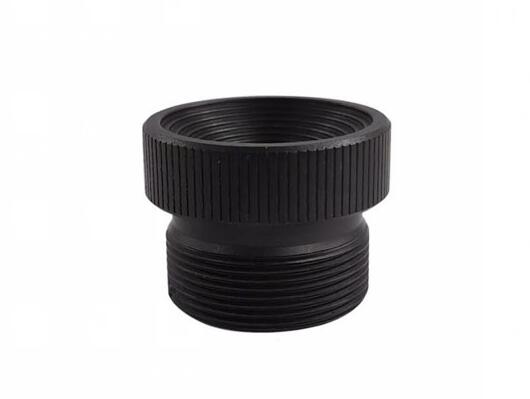
Characteristics of Megapixel M12 Board Lens with IR Filter
Image Clarity and Resolution Capabilities
High Resolution: With a sharp and clear view, this is usually provided from 5MP to 10MP; these lenses become appropriate in applications needing very minute detail with great accuracy. For example, AICO’s 25mm 2/3″ format F2.5/F5.6/F8.0 10MP M12 board 4K macro lens provides exceptional clarity across its working range from 0.1m to 0.5m with distortion less than 0.5%.
Integration of IR Filter for Day-Night Functionality
Many megapixel-grade M12 board lenses include built-in IR-cut filters that automatically switch based on lighting conditions. This functionality enables clear color images during daytime and infrared-sensitive monochrome images at night—ideal for surveillance applications.
Use Cases in Surveillance, Robotics, and Industrial Vision
They could fit inside various types of space-constrained cameras, such as surveillance cameras, drones, or portable examination tools. In robotics and machine vision systems requiring precision object detection or measurement under varying lighting conditions, these lenses offer reliability and performance.
Optical Quality Control and Manufacturing Standards
AICO adheres to strict ISO9001, ISO/TS16949, and ISO14001 Quality Management Systems in order to make sure that each and every lens offers high performance and is durable. Their advanced production lines ensure consistency across large-scale batches—vital for OEM integrators.
Comparing the M8 Mount Lens with the M12 Mount Lens
Differences in Thread Size and Mechanical Dimensions
The most obvious difference between the two mounts is their physical size—M8 uses an 8mm thread while M12 uses a 12mm one. This affects not only compatibility with camera boards but also how much light can be gathered through the aperture.
Field of View, Focal Length, and Aperture Comparison
Due to their larger barrel size, M12 macro lenses can be used in a wide range of applications… by using a wide range of focal lengths and aperture settings. For instance, AICO’s lineup includes options from ultra-wide angle (2mm) up to telephoto (50mm) focal lengths with apertures ranging from F1.4 to F8 or higher.
In contrast, most M8 lenses have shorter focal lengths (typically under 6mm) with fixed apertures optimized for close-range imaging tasks.
Suitability for Varying Camera Module Designs
If your design requires minimal volume—such as wearable tech or surgical instruments—the m8 mount mini board lens is more suitable due to its tiny footprint. For general-purpose board cameras supporting higher resolutions or larger sensors (up to 2/3”), an M12 mount is preferable.
Impact on Image Quality and System Integration
While both mounts serve specific needs well, AICO lenses… are designed to provide superior resolution and sharp focus. The larger optics available through an M12 mount generally yield better image quality due to reduced aberrations and increased light collection ability.
Choosing Between an M8 or M12 Lens for Your Application
Key Factors to Consider: Size Constraints, Resolution Needs, Lighting Conditions
When selecting between these two mounts:
- Choose M8 if your design demands extreme compactness.
- Choose M12 if your application requires higher resolution or better low-light performance.
- Consider lighting: If infrared capability is essential (e.g., night vision), opt for an M12 board lens with IR filter.
When to Choose an M8 Mount Mini Board Lens or Endoscope Lens
Select an m8 mount mini board lens when working within severe spatial constraints—such as embedded modules inside medical devices—or when minimal weight is required without sacrificing basic imaging functionality.
When a Megapixel M12 Board Lens with IR Filter is More Suitable
Use megapixel-grade M12 lenses when clarity matters most—for example:
- Industrial inspection
- Security monitoring
- High-resolution robotics vision systems
For those who are looking for a compact yet high-performance lens… this lens is optimized for 2/3″ image format sensors
| Feature | M8 Lens | M12 Lens |
|---|---|---|
| Thread Size | 8mm | 12mm |
| Flange Focal Distance | Shorter | Longer (12mm) |
| Common Applications | Compact devices, endoscopes, barcodes | Surveillance, robotics, high-res cameras |
| Sensor Compatibility | Small sensors (up to 1/3”) | Larger sensors (up to 2/3”) |
| Resolution Range | Lower resolution (up to 3MP) | Higher resolution (up to 10MP) |
| Aperture Settings | Fixed aperture, small focal length | Adjustable aperture, wide focal range |
| Image Quality | Basic clarity for close tasks | High clarity, better low-light performance |
| Size | Ultra-compact | Larger, suitable for more space |
| IR Filter | Not typically included | Often includes IR filter for day/night use |
| Ideal For | Medical imaging, embedded systems | Industrial, security, robotics |
| Weight | Light | Heavier but provides better performance |
| Cost | Typically lower | Typically higher |
Frequently Asked Questions (FAQ)
What does “mount” mean when referring to camera lenses?
A: “Mount” refers to how a camera lens physically attaches to a camera body or sensor module—in this case via threaded connections like those found on m5 / m7 / m8 or m12 mounts.
What makes m8 mount mini board lens suitable for medical use?
A: Due to their ultra-small size and ability to fit into narrow spaces like endoscopes without compromising basic image quality.
Can I use an m12 lens on any board camera?
A: Only if the camera supports an m12 threaded interface; otherwise adapters may be needed—but compatibility must be checked carefully against sensor size requirements.
Are custom optical designs available?
A: Yes! Hangzhou AICO Electronics Co., Ltd. keep providing innovative optical solutions tailored by request across medical imaging devices or industrial automation systems alike.
To find the right lens, or to customize your device, please contact us, reach out to AICO today. Their smart designs and careful work make them a great choice!